
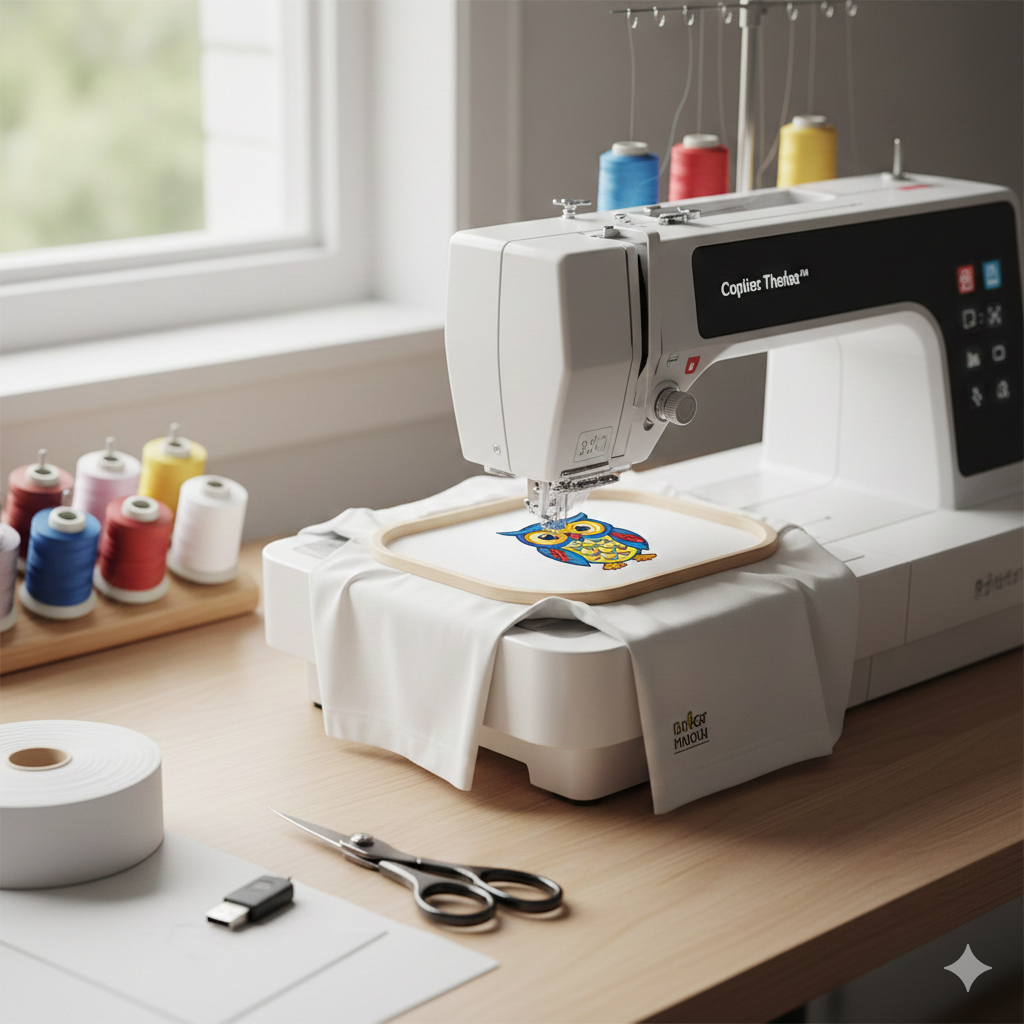
Welcome to the most complete guide to computerized embroidery you’ll find online. Whether you are moving from hand stitching to automated designs or launching a small business, choosing the right machine is the foundational step to success.
I’m Aurora Grace, the founder of Craftideas.blog, and through my years of experience, I’ve navigated the complexities of hoop sizes, digitizing software, and machine speeds. In this definitive guide, we break down everything you need to know, from the core mechanics of top brands like Brother and Janome to essential accessories that save you time and money.
By the end of this guide, you will know exactly:
- Which machine category fits your creative goals and budget.
- The 5 non-negotiable technical specs (SPM, Hoop Size, etc.) to look for.
- The best essential accessories you need to buy alongside your machine.
1. Finding Your Perfect Match: Types of Embroidery Machines
Jump to:
The first step in finding the right machine is understanding your primary use case. Are you purely a hobbyist, or do you intend to make money?
A. For the Hobbyist and Beginner (Entry-Level)
These machines are designed for ease-of-use and learning. They are generally reliable but have smaller hoop sizes and slower speeds.
- Best For: Personalizing gifts, simple monograms, small patches, and testing the waters.
- Key Features: Automatic needle threader, intuitive touchscreen, good library of built-in designs.
- Typical Models: Brother PE535, Brother PE800.
B. The Multi-Talented Crafter (Combo Machines)
These machines combine a full-featured sewing machine with an embroidery unit. They offer great versatility if your craft requires both sewing and embellishment.
- Best For: Quilters, garment makers who want to add decorative touches, and those with limited space.
- Key Consideration: Remember you usually have to swap out the sewing foot for the embroidery arm, which takes a moment.
- Typical Models: Brother SE600, Brother SE1900.
C. The Serious Entrepreneur (Mid-Range/Semi-Pro)
This category represents serious investment, offering high speed, large hoop capacity, and powerful editing software integration.
- Best For: Small batch production, fulfilling client orders, large jacket backs, and advanced projects.
- Key Features: Higher Stitches Per Minute (SPM), very large hoop sizes (up to 12″x8″), reliable performance under continuous use.
- Typical Models: Janome Memory Craft 500E, Higher-end Brother models.
2. The Essential Buying Guide: 5 Non-Negotiable Factors
Don’t buy a machine based on color! Focus on these five technical specifications—they are what truly determine the machine’s capabilities.
A. Hoop Size (The Most Important Dimension)
The hoop size determines the maximum size of the design you can stitch in a single go.
- 4″ x 4″: Minimum standard. Fine for small logos and monograms, but often restrictive.
- 5″ x 7″: Highly Recommended Minimum. This size offers great versatility for shirt pockets, towels, and medium-sized designs. Most beginner machines, like the Brother PE800, offer this.
- 6″ x 10″ and Up: Essential for commercial work, jacket backs, or large quilt blocks. Look for this in machines like the Janome Memory Craft 500E.
B. Stitches Per Minute (SPM): Speed Matters
SPM tells you how fast the machine can stitch. This is crucial if you plan on selling your crafts.
- Beginner (400 – 650 SPM): Perfectly adequate for home hobby use.
- Semi-Pro/Commercial (800+ SPM): Required for production work where every minute saved is profit.
C. Built-in Designs vs. Connectivity
Don’t be fooled by machines boasting “500 built-in designs.” You will quickly want to stitch your own custom files.
- Connectivity is King: Ensure the machine has a USB port. This allows you to easily load custom digitized designs (usually in
.PES,.DST, or.JEFformat) from a flash drive. This future-proofs your machine.
D. Automatic Threading and Trimming
These features are non-negotiable for a pleasant experience.
- Automatic Needle Threader: Saves your eyes and massive amounts of time, especially during color changes.
- Automatic Thread Trimming: A feature where the machine cuts the connecting threads between design elements. This professional touch saves hours of manual snipping after a large project.
E. Price Range and Warranty
Be realistic about your budget, but view this as an investment. Expect to pay:
| Category | Typical Price Range (USD) | What You Get |
| Beginner/Budget | $400 – $800 | 4″x4″ or 5″x7″ hoop, simple features, plastic build. |
| Mid-Range/Combo | $800 – $1,500 | 5″x7″ hoop, metal frame stability, sewing function included. |
| Semi-Pro/Large Hoop | $1,500+ | Fast SPM, 6″x10″ hoop or larger, robust build quality, advanced editing. |
Tip: Always check the warranty length. Major brands like Brother and Janome typically offer 1 to 2 years for the machine and 25 years for the structural frame.
3. Beyond the Machine: Software and Essential Accessories
The machine is only half the battle! These accessories and tools are essential for successful, professional-looking results and are often overlooked by beginners.
A. Understanding Digitizing Software
To create your own custom designs (like logos or drawings), you need digitizing software. This program translates an image into stitch commands the machine can read (.PES, .DST, etc.).
- For Beginners: Start with simple, free trials or low-cost programs. You can always purchase pre-made designs online (Etsy is a great resource).
- For Business: Invest in powerful software like Brother PE-Design or Hatch if you plan to create unique, complex designs professionally.
B. The 5 Must-Have Accessories (Maximize Your Value)
Buy these immediately to avoid frustrating project failures!
- Stabilizers (The Fabric Backbone): You cannot embroider without a stabilizer. It prevents the fabric from puckering or pulling. Always have tear-away (for woven fabrics) and cut-away (for stretchy knits) in stock. Check out my recommended beginner stabilizer bundle on Amazon.
- Embroidery Thread Kits: Avoid cheap, non-branded threads. Low-quality thread breaks constantly and ruins your design. Invest in reliable Polyester or Rayon threads. Shop my favorite reliable, multi-color thread kit.
- Pre-wound Bobbins: Winding your own bobbins is tedious. Buying pre-wound bobbins specific to your machine is a massive time-saver.
- Specialty Scissors/Snips: You need sharp, curved embroidery snips to trim jump stitches cleanly without nicking the fabric.
- Extra Hoops: Having multiple hoops allows you to prepare your next fabric while one project is stitching, significantly increasing your productivity.
4. Final Verdict: Making Your Investment
Choosing the right embroidery machine is about aligning features with your specific creative and financial goals.
- If you’re looking for the best combination of quality and value to start your hobby, we strongly recommend our top beginner pick, the Brother PE800 (5″x7″ hoop).
- If your goal is to launch a small business with high-volume production, the power and large hoop of the Janome Memory Craft 500E is worth the investment.
Ready to start creating? Use our links below to check the latest prices and find the best deals on Amazon today.