

If you are putting together your first craft space, it is very easy to buy too much too soon. Craft stores are full of clever gadgets, specialty cutters, punches, machines, and tools that look useful before you have a project that actually needs them.
A good beginner craft kit should help you cut, measure, stick, paint, and tidy up comfortably. Everything else can be added when your favorite type of craft starts to become clear.
This post may contain affiliate links. If you buy through one of these links, Craft Ideas may earn a commission at no extra cost to you.
What craft tools does a beginner really need?
Jump to:
For most general DIY projects, start with six basics: good scissors, a cutting mat, a precision craft knife, a ruler, a dependable adhesive, and a small set of paintbrushes. Those tools cover a surprising amount of paper craft, felt work, simple home decor, school projects, card making, and mixed-media crafting.
Pliers, a heat tool, a sewing machine, and larger storage systems can be excellent purchases too, but they are not universal essentials. They make more sense once you know whether you are leaning toward jewelry, embossing, sewing, vinyl projects, or another specialty.
Start with the job, not the gadget
A useful way to build a craft kit is to think about the jobs you repeat. You need something to cut with, something to protect the table, something to measure with, and something to join materials together. If a tool solves one of those jobs across several projects, it earns its place early. If it only helps with one technique you have not tried yet, it can probably wait.
This approach also makes affiliate shopping more useful. Instead of buying a large “everything included” kit full of pieces you may never touch, you can choose a few reliable tools and then add specialty items as your projects become more specific.
1. Scissors: the first tool I would buy
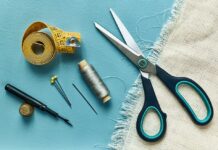
A comfortable pair of sharp scissors belongs in almost every craft drawer. For paper, ribbon, cardstock, felt, thin foam, and everyday trimming, a general-purpose pair is usually enough to get started.
If you also sew, keep a separate pair for fabric. Cutting paper with fabric scissors dulls the edge faster, and that can turn a clean fabric cut into a frustrating, fuzzy one. You do not need a drawer full of scissors on day one; one dependable general pair and, when needed, one fabric-only pair is a sensible setup.
- Look for: comfortable handles, a smooth cutting action, and blades long enough for the materials you use most.
- Add later: small detail scissors if you start cutting intricate paper shapes, embroidery threads, or appliqué pieces.
2. A self-healing cutting mat protects your table
A cutting mat is one of those tools that does not feel exciting until you work without one. It gives you a safer surface for craft-knife work, helps protect desks and countertops, and usually includes a printed grid that makes quick measurements easier.
For general crafting, choose a mat that fits the size of projects you make most often rather than automatically buying the largest one available. A medium mat is easier to store and still handles cards, vinyl pieces, felt shapes, small sewing projects, and many paper crafts.
Keep the mat flat when you store it. Heat and bending can warp the surface, which makes accurate cutting much harder.
3. A craft knife is for the cuts scissors cannot make
Scissors are great for outside edges, but a precision craft knife is much better for small windows, interior shapes, tight corners, stencils, and detailed paper work. It is also useful for scoring some materials when a project calls for a controlled fold.
The blade should do the work. If you find yourself pressing very hard, the blade may be dull. Replacing a blade is usually safer and gives a cleaner result than forcing a worn one through cardstock or foam board.
Safety note: always use a cutting mat, cut away from your body, cap or store the knife when you are finished, and keep precision blades out of children’s reach.
4. Adhesives first, hot glue gun second
A hot glue gun is useful, but it should not be your only adhesive. Paper projects often look cleaner with a glue stick, double-sided tape, or a suitable liquid craft glue. Hot glue becomes more useful when you are attaching thicker materials, building small decorations, working with wood pieces, wreaths, felt, or projects where you want the bond to grab quickly.
If you are shopping for one, choose the temperature and size for the materials you actually use. A small or lower-temperature model can be easier for light craft work, while larger high-temperature models are more appropriate for heavier materials and stronger bonds. Hot glue and the metal nozzle can cause burns, so this is an adult-use or closely supervised tool.
If glue guns are becoming a regular part of your projects, see our guide to the best hot glue guns for crafting before upgrading.
5. A ruler does more than measure
A ruler helps with layout, spacing, straight lines, repeatable cuts, and checking whether pieces are the same size before you glue them down. For craft-knife work, I prefer the idea of a sturdy straightedge over a soft plastic ruler because it gives the blade a more reliable guide.
It is useful to have both inches and centimeters, especially when you follow tutorials from different countries. A flexible measuring tape can come later if you start sewing, making wearables, or working around curved objects.
6. A small paintbrush set is more useful than a giant one
Beginners do not need thirty nearly identical brushes. A few synthetic brushes in different shapes and sizes will cover acrylic paint, poster paint, glue application, simple detail work, wood crafts, and many kids’ projects.
A practical starter set might include a medium flat brush for coverage, a smaller flat or angled brush for edges, and one round detail brush. Clean them soon after use and store them with the bristles protected rather than crushed against the bottom of a container.
7. Pliers are essential only when your projects need wire
Pliers move from “optional” to “essential” very quickly if you start making jewelry, bending wire, opening jump rings, shaping eye pins, or working with small metal findings. For general paper and paint crafts, though, they can wait.
If jewelry making is on your list, a small set with needle-nose or chain-nose pliers, round-nose pliers, and wire cutters is more useful than one large household pair. Each shape does a different job, and using the right one gives you better control over small components.
8. An embossing heat tool is a specialty purchase
A heat tool is wonderful for heat embossing, shrink plastic, and certain mixed-media techniques, but I would not put it in a universal beginner kit. Buy it when a project gives you a reason to use it rather than because it appears on a generic “must-have” list.
Craft heat tools can become extremely hot. Work on an appropriate surface, keep the airflow away from your fingers, hair, paper scraps, and anything flammable, and let the tool cool fully before storing it.
9. A sewing machine is a major upgrade, not a starter requirement
A sewing machine can open up clothing repairs, bags, quilts, fabric gifts, home decor, and dozens of other projects. But if you are still exploring paper crafts, painting, macrame, or jewelry, it is not an “essential” craft purchase.
Start with a machine when sewing is clearly something you want to do more than once. For a beginner, easy threading, simple controls, a dependable straight stitch, zigzag stitch, and commonly used presser feet usually matter more than a very long list of decorative stitches.
You can browse more sewing-related recommendations in our Craft Supplies & Tools guides.
10. Craft storage becomes important after the tools do
You do not need a Pinterest-perfect craft room to stay organized. Start with storage that lets you see and reach the supplies you already own. Clear boxes, small divided containers, drawer organizers, and a simple rolling cart can all work depending on your space.
The best storage system is the one that keeps frequently used tools easy to grab and makes small supplies easy to return when the project is finished. Before buying more containers, group your supplies by how you actually craft: cutting tools together, adhesives together, paint supplies together, and project-specific materials together.
What I would skip when building a first craft kit
Some tools are genuinely useful but make more sense after your first few projects. Large electronic cutting machines, expensive sewing machines, specialized punches, full professional brush sets, and technique-specific heat tools can all be great purchases once you know you will use them.
If vinyl, labels, cards, or precision paper cutting becomes your main hobby, an electronic cutting machine may save a lot of repetitive work. Our die-cut machine guide explains the main options, and the Cricut Explore Air 2 review is a useful starting point if you are comparing beginner-friendly electronic cutters.
Build your craft kit around the projects you enjoy
For paper crafts: prioritize scissors, a cutting mat, a craft knife, a ruler, and paper-friendly adhesive. Add a paper trimmer, scoring tool, punches, or die-cut machine only when you know they will save you time.
For sewing and fabric crafts: add fabric-only scissors, a flexible measuring tape, pins or clips, hand-sewing needles, and eventually a sewing machine. A rotary cutter is also useful for repeated straight fabric cuts.
For jewelry and wire crafts: start with pliers and cutters designed for small findings. Storage with divided compartments quickly becomes more valuable because beads and hardware are easy to mix together.
For painting and mixed media: spend more attention on a few useful brush shapes, a protected work surface, jars or palettes, and the right adhesive for the materials you combine.
For kids’ crafts: keep the toolkit simple and age appropriate. Blunt-tip scissors, washable color supplies, glue sticks, and easy-to-clean work surfaces are usually more useful than sharp or heated tools.
How to choose better craft tools without overspending
You do not have to buy the most expensive version of every tool. Instead, spend more where poor quality creates repeated frustration. Scissors that chew through paper, a ruler that slips constantly, or a craft knife with a loose blade can make simple projects harder than they need to be.
For tools you use only occasionally, a basic model may be enough. For tools you reach for every week, comfort, replacement parts, blade availability, and durability are worth considering. The goal is not to own the biggest craft collection; it is to have a small group of tools that make you want to keep creating.
A simple beginner craft-tool checklist
- General-purpose craft scissors
- Self-healing cutting mat
- Precision craft knife with replacement blades
- Ruler or straightedge
- Glue stick, double-sided tape, or liquid craft glue suited to your projects
- Small synthetic paintbrush set
- Optional hot glue gun for thicker or fast-setting projects
- Optional pliers for jewelry and wire work
- Optional heat tool for embossing and shrink projects
- Optional sewing machine when sewing becomes a regular hobby
- Simple storage that fits the supplies you already own
Final thoughts
The most useful craft kit is not the one with the most tools. It is the one that fits the projects you are excited to make. Start with the basics, notice which job keeps slowing you down, and add one tool that solves that problem. Your collection will grow naturally without filling the room with gadgets you never use.
If you are ready to add more specialized equipment, browse the Craft Ideas tool and product guides for comparisons focused on real craft use cases rather than simply buying the most expensive option.