

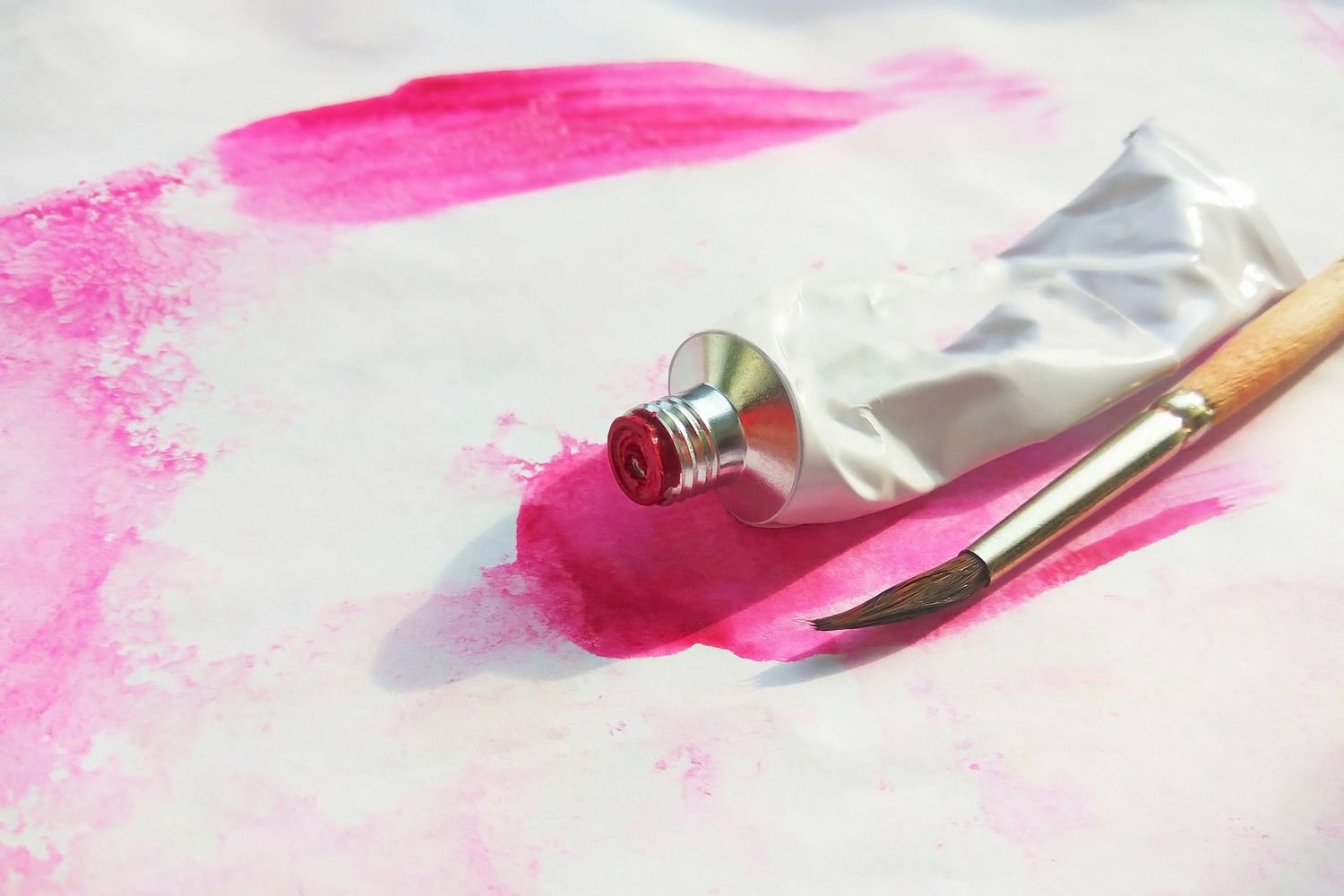
The best acrylic paint brand depends less on the logo and more on what you need from the paint. A beginner covering large canvases may get more value from Liquitex BASICS or Blick Studio, while an artist who wants documented professional pigments and heavy texture may prefer GOLDEN Heavy Body or Winsor & Newton Professional Acrylic.
This guide compares six current acrylic paint lines by consistency, pigment positioning, permanence information, color choice, canvas use, and value. It does not assume that the cheapest paint is the best bargain—or that the most expensive paint is automatically the right choice.
Best Acrylic Paint Brands — Quick Picks
Jump to:
| Best for | Brand / line | Paint type | Price tier | Main strength |
|---|---|---|---|---|
| Best overall value | Liquitex BASICS Acrylic | Medium-viscosity everyday acrylic | Budget to mid-range | Broad range, easy availability, useful balance of quality and cost |
| Best budget craft paint | FolkArt Matte Acrylic | Matte craft acrylic | Budget | Very wide color selection for decorative and craft work |
| Best for beginners | Blick Studio Acrylics | Thick student/value acrylic | Budget to mid-range | Beginner-friendly positioning with a heavier paint feel |
| Best professional heavy body | GOLDEN Heavy Body Acrylics | Professional heavy body | Premium | Extensive pigment and lightfastness documentation |
| Best for color matching | Winsor & Newton Professional Acrylic | Professional acrylic | Premium | Binder designed to reduce wet-to-dry color shift |
| Best for longer working time | M. Graham Acrylic | Professional high-solid acrylic | Premium | Manufacturer positions the line around extended workability |
Shortest answer: choose Liquitex BASICS if you want one broadly useful, economical line; Blick Studio if you are learning and prefer thicker paint; GOLDEN Heavy Body if professional pigment documentation and texture matter most; and Winsor & Newton Professional if predictable color matching is a priority.
How We Chose the Best Acrylic Paint Brands
This comparison is based on current manufacturer documentation and each line’s intended use—not unverified hands-on claims. The most useful criteria are:
- Pigment positioning: whether the manufacturer describes the line as value/student, everyday, craft, or professional.
- Coverage and opacity information: whether colors are labeled opaque, semi-opaque, semi-transparent, or transparent.
- Consistency: medium body, heavy body, fluid, or another viscosity that affects brushwork and texture.
- Color range: whether the line supports a small starter palette or a broad selection of specialty colors.
- Lightfastness and permanence data: especially important for work that will be displayed, sold, or kept long term.
- Value: how much useful paint performance you get for the price tier, not simply the lowest shelf price.
- Beginner friendliness: ease of purchase, manageable consistency, starter sets, and enough colors to learn mixing.
- Professional use: pigment disclosure, permanence documentation, specialized colors, and paint behavior suited to intentional studio techniques.
Acrylic formulas within the same brand can be very different. GOLDEN Heavy Body and GOLDEN High Flow, for example, solve different problems. This roundup compares the six lines named here rather than treating every product made by a brand as interchangeable.
Best Affordable Acrylic Paint: Cheap vs Good Value
The best inexpensive acrylic paint is not necessarily the paint with the lowest price per bottle. A cheap paint becomes poor value if weak color forces you to use many layers, if the consistency fights your technique, or if you need permanence information that the line does not provide.
For general painting, Liquitex BASICS is the strongest affordable all-around option in this group. Liquitex positions BASICS as an economical medium-viscosity acrylic made with the same type of fine-art pigments used in its professional range, but with a lighter pigment load. That distinction matters: it is designed to cost less without pretending to be the same formulation as Liquitex Professional Heavy Body.
Blick Studio is another strong value choice for students and beginners who prefer a thicker, more oil-paint-like feel. Blick describes the line as student/beginner oriented while also publishing permanence and lightfastness claims for the range.
FolkArt Matte is cheaper and available in a very large decorative color range, but it fills a different role. It is best treated as an affordable craft acrylic for decorative painting, wood projects, signs, and hobby work rather than a direct substitute for a professional fine-art line when detailed pigment and lightfastness documentation is important.
When a cheaper acrylic makes sense
- Practice studies and color exercises
- Large underpaintings
- Sketchbook work
- Craft projects where decorative color matters more than professional pigment documentation
- Learning brush control and color mixing before investing in premium colors
When paying more can be worthwhile
- You sell or exhibit finished paintings.
- You need per-color permanence or lightfastness information.
- You depend on strong tinting and predictable mixing from specific pigments.
- You build texture with heavy body paint and want the brush or knife mark to remain visible.
- You need specialized pigments that are not common in value ranges.
Best Acrylic Paint for Beginners
Beginners do not have to use student-grade paint, but a good starter line should be affordable enough to encourage experimentation. The ideal beginner paint also needs a manageable consistency, common starter colors, and easy replacement when one tube runs out.
Blick Studio Acrylics are a good fit if you want a thicker acrylic while learning. Blick explicitly positions the line for students and beginners and sells individual tubes as well as multi-color sets.
Liquitex BASICS are a better fit if you want a broad everyday system that can continue into underpainting, color studies, mixed media, and larger work. The medium viscosity is less specialized than a heavy-body professional paint and gives new painters room to explore different brush techniques.
A smaller starter palette is often better than a huge set. Titanium White plus a warm and cool version of the primary colors—or a simpler primary palette—teaches more about mixing than relying on dozens of premixed shades.
Best Professional Acrylic Paint
Professional acrylics cost more because the line is built around artist-level pigment choices, stronger documentation, and more specialized behavior—not because a premium label makes every color automatically more opaque.
GOLDEN Heavy Body Acrylics stand out in this group for published pigment and lightfastness information. GOLDEN currently lists 101 Heavy Body colors and states that 94 are rated excellent for lightfastness and the remaining seven very good. The line is high viscosity, so it is particularly relevant to brushwork, palette-knife work, and texture.
Winsor & Newton Professional Acrylic is another professional choice. Winsor & Newton’s current range emphasizes a translucent binder system designed to reduce color shift as the paint dries, which helps when matching mixed color.
M. Graham Acrylic is the specialist choice here for painters who want more working time. M. Graham describes its formula as a high-solid acrylic emulsion and states that working time can extend up to about an hour depending on temperature and humidity. Treat that as a manufacturer-stated characteristic rather than a guaranteed drying time for every studio.
Student-Grade vs Professional Acrylic Paint
| Student / value acrylic | Professional acrylic | |
|---|---|---|
| Price | Lower | Higher |
| Pigment concentration | Often lower or formulated for economy | Typically positioned for stronger pigment performance and specialized pigments |
| Color range | Core colors plus convenient hues | Often broader in single-pigment and specialty choices |
| Mixing strength | Good for learning and general work; varies by line and color | Often stronger when the line uses higher pigment loading or more concentrated artist colors |
| Permanence data | May be limited or generalized | Usually more detailed by color |
| Best for | Beginners, studies, underpainting, practice, budget-conscious painting | Finished work, controlled mixing, professional workflows, specialized pigments |
Student or value paint is not automatically bad. Liquitex BASICS, for example, deliberately uses a lighter pigment load than the Liquitex professional range while still providing opacity and lightfastness information. The useful question is whether the line gives you enough color strength, consistency, and permanence information for the work you are making.
What Makes a Good Acrylic Paint?
Pigmentation
Pigment determines the color itself; pigment concentration and formulation influence color strength. More expensive paint may use more costly pigments or a formulation built for stronger mixing, but you should judge individual colors rather than assuming every premium tube behaves identically.
Opacity and Transparency
Some pigments are naturally transparent, while others are naturally opaque. A transparent professional color is not a defective paint. Look at the manufacturer’s opacity symbol or product data when coverage matters.
Consistency
Heavy-body paint holds brush and palette-knife marks. Medium-viscosity acrylic is more general purpose. Fluid and high-flow acrylics move more easily and suit different techniques. Choose viscosity for the job rather than treating thickness as a universal quality score.
Coverage
Coverage is a combination of pigment, opacity, color choice, surface, and application thickness. Titanium White may cover differently from a transparent quinacridone even within the same professional line.
Color Mixing
A useful paint line should let you predict mixtures. Clear pigment labeling is especially valuable when you want clean secondary colors or repeatable studio mixtures.
Drying Behavior
Acrylic dries by water evaporation and film formation, but exact working time varies with paint thickness, humidity, temperature, surface, and additives. If you need a longer open time, choose a line formulated for it or use an appropriate acrylic medium rather than relying on a fixed drying-time claim.
Permanence
For artwork intended to last, check each color’s lightfastness and permanence information. Professional manufacturers usually publish this data by color because different pigments can have different ratings.
Value
Value is the relationship between cost and the result you need. A budget paint can be excellent value for studies and large backgrounds; a professional tube can be better value when a strong, documented pigment lets you mix efficiently and use less paint for the same color effect.
Best Acrylic Paint for Canvas
Most artist acrylics can be used on properly prepared canvas, but the best consistency depends on how you paint.
- General brush painting: Liquitex BASICS or Blick Studio give you approachable viscosity without premium pricing.
- Visible brush and knife texture: GOLDEN Heavy Body is designed for high-viscosity applications.
- Professional color matching: Winsor & Newton Professional Acrylic is relevant when wet-to-dry color shift matters to your workflow.
- Longer blending and working time: M. Graham is worth considering when you want a slower-working acrylic formulation.
- Decorative craft canvas: FolkArt can work when the goal is decorative color and budget rather than professional pigment documentation.
The canvas matters too. A heavily textured, absorbent, or poorly primed surface can change how any acrylic feels. See the Craft Ideas canvas guide if you are choosing the surface as well as the paint.
Heavy Body vs Fluid vs High Flow Acrylic
| Type | Consistency | Best for |
|---|---|---|
| Heavy body | Thick; retains brush and knife marks | Impasto, textured brushwork, palette knife |
| Fluid acrylic | Pourable but still artist acrylic | Glazing, smoother applications, fine detail, pouring with appropriate medium |
| High flow | Ink-like, very low viscosity | Airbrush, fine line, staining, refillable markers, fluid detail |
Do not buy heavy body simply because it sounds more professional. Viscosity is a technique choice. If you specifically want very low-viscosity paint, read the Golden High Flow Acrylic review; this roundup keeps the focus on brand and line selection rather than duplicating that product review.
The 6 Best Acrylic Paint Brands Reviewed
1. Liquitex BASICS Acrylic — Best Overall Value


Best for: beginners, hobby artists, studies, underpainting, general canvas work
Price tier: Budget to mid-range
Consistency: Medium viscosity
Color range: Broad current range with individual colors and sets
Main strength: Strong balance of economy, color choice, and artist-oriented labeling
Main limitation: Liquitex states that BASICS uses a lighter pigment load than its professional range
Who should buy it: Anyone who wants one economical acrylic system that can cover practice, studies, mixed media, and everyday painting
Liquitex BASICS is a better choice than the old article suggested—not because it is “professional grade,” but because it is clearly positioned as an economical everyday line without hiding the tradeoff. Liquitex states that BASICS uses the same type of lightfast fine-art pigments as its professional range with a lighter pigment load.
That makes BASICS useful for painters who want to learn with artist-oriented color labeling but do not want to pay professional Heavy Body prices for every exercise. The medium viscosity is also broadly useful: it is substantial enough for normal brush painting but less specialized than a dense impasto paint.
Liquitex publishes opacity and lightfastness information for individual BASICS colors. The current product pages also show multiple tube and bottle sizes, so frequently used colors such as Titanium White can be purchased larger than less-used colors.
Choose it over a premium line when: you paint often, cover larger areas, are still learning color mixing, or need affordable paint for underpainting and studies.
Skip it when: your priority is maximum pigment concentration, specialized professional pigments, or pronounced heavy-body texture.
2. FolkArt Matte Acrylic — Best Cheap Acrylic for Crafts

Best for: decorative crafts, wood, signs, hobby painting, inexpensive color variety
Price tier: Budget
Consistency: Creamy craft-paint consistency
Color range: Very broad matte decorative range
Main strength: Low-cost access to many premixed colors
Main limitation: Not the best choice here when you need the same per-pigment fine-art documentation supplied by professional artist lines
Who should buy it: Crafters and hobby painters who value color selection and low replacement cost more than professional pigment specifications
FolkArt is the most important line in this roundup for understanding the difference between cheap and good value. Plaid currently offers the matte acrylic range in a very large selection of decorative colors, with common small bottles that make it inexpensive to buy specific shades for crafts.
That is a real advantage for signs, ornaments, wood projects, decorative canvas work, and projects where you want a ready-made color rather than mixing it from primaries.
But FolkArt should not be presented as the direct budget equivalent of GOLDEN Heavy Body or Winsor & Newton Professional Acrylic. Those professional lines publish detailed artist-color data and are designed around fine-art use. FolkArt’s strength is accessible decorative color and craft versatility.
Choose it when: you want the lowest-cost line in this group for craft painting and lots of premixed color options.
Skip it when: the work is intended for professional display and you need detailed pigment, opacity, and permanence information for every color.
3. M. Graham Acrylic — Best for Longer Working Time

Best for: painters who want more time to blend and manipulate acrylic
Price tier: Premium
Consistency: Professional high-solid acrylic
Color range: Artist palette covering traditional and modern pigments
Main strength: Extended workability is a central feature of the manufacturer’s formulation
Main limitation: Premium pricing and a more specialized reason to choose it
Who should buy it: Acrylic painters who dislike an extremely short working window and want a professional artist line
M. Graham is the specialist choice among these six. The company describes its acrylic as a high-solid emulsion and states that it does not use fillers, waxes, retardants, bulking agents, or whiteners in the formulation.
The most useful difference is workability. M. Graham states that the paint can provide up to about an hour of working time depending on temperature and humidity. That is not a promise that every brushstroke stays wet for 60 minutes; it is a manufacturer-stated characteristic that makes the line relevant to painters transitioning from slower media or anyone frustrated by fast acrylic setup.
The current M. Graham color information also identifies pigments and opacity, which matters when you are building a controlled professional palette.
Choose it when: longer manipulation and blending time are high priorities.
Skip it when: budget is the main concern or you actually prefer acrylic’s fast-setting workflow.
4. GOLDEN Heavy Body Acrylics — Best Professional Heavy Body

Best for: professional painting, texture, palette-knife work, documented pigment performance
Price tier: Premium
Consistency: Heavy body / high viscosity
Color range: 101 current Heavy Body colors
Main strength: Detailed professional pigment and lightfastness documentation
Main limitation: Higher cost than value and student lines
Who should buy it: Artists who need heavy texture, strong studio documentation, and a broad professional palette
GOLDEN Heavy Body is the clearest premium recommendation in this roundup when professional documentation matters. GOLDEN currently lists 101 colors in the Heavy Body line and states that 94 are rated excellent for lightfastness while the remaining seven are rated very good.
The high-viscosity consistency is designed to hold brush and palette-knife marks, which makes this line a natural choice for impasto and visible texture. That same thickness is not automatically an advantage for every technique: if you paint thin glazes or airbrush, a fluid or high-flow formulation is more appropriate.
The value of GOLDEN is not simply that it is expensive. It is that the brand publishes pigment, opacity, and lightfastness information that helps painters make deliberate choices color by color.
Choose it when: your work depends on texture, professional pigment information, or a broad artist palette.
Skip it when: you are mainly practicing, covering large backgrounds on a tight budget, or need an ink-like acrylic. For the last case, see the Golden High Flow Acrylic review.
5. Winsor & Newton Professional Acrylic — Best for Color Matching

Best for: professional canvas painting, controlled mixing, painters concerned about wet-to-dry color shift
Price tier: Premium
Consistency: Professional acrylic
Color range: Current range lists 80 products/colors
Main strength: Binder technology designed to reduce color shift as acrylic dries
Main limitation: Premium cost and more performance than casual craft work requires
Who should buy it: Painters who want a professional line and place high value on predictable color matching
Winsor & Newton’s Professional Acrylic line focuses on one of acrylic painting’s practical frustrations: color can appear different after the water leaves the wet film. The company says its translucent binder is designed so colors show less wet-to-dry shift, making color matching easier.
The current North American range shows 80 products and provides permanence, lightfastness, opacity, and series information. Common colors are available in 60 ml tubes, with larger sizes available for selected colors.
This line makes the most sense for deliberate canvas painting where you are mixing specific colors and want professional labeling. If you simply want an affordable Winsor & Newton acrylic for learning, the brand’s Galeria line addresses a different price tier.
For that value-oriented line, read the Winsor & Newton Galeria Acrylic review rather than treating Galeria and Professional Acrylic as the same paint.
6. Blick Studio Acrylics — Best for Beginners Who Want Thicker Paint

Best for: beginners, students, studies, classroom/studio practice, thicker brushwork
Price tier: Budget to mid-range
Consistency: Thick, oil-paint-like acrylic
Color range: Individual colors plus multi-color starter and expanded sets
Main strength: Beginner/student value with a heavier consistency
Main limitation: A value line rather than the most specialized professional palette in this group
Who should buy it: New acrylic painters who want affordable paint that feels substantial under the brush
Blick Studio is a strong beginner alternative to Liquitex BASICS because the two lines feel conceptually different. Blick describes Studio Acrylics as thick and oil-paint-like, while Liquitex positions BASICS as medium viscosity.
That makes Blick Studio useful if you want to learn visible brushwork and texture without moving immediately to premium heavy-body prices. Current product information lists 21 ml and 120 ml tubes and multiple set sizes.
Blick also describes the range as permanent and lightfast. As with any paint line, check the information for the exact color you plan to use when permanence is critical.
Choose it when: you are learning and want a thicker paint feel at a value price.
Skip it when: you need the broader professional pigment specialization and documentation of GOLDEN Heavy Body or Winsor & Newton Professional.
Which Acrylic Paint Brand Should You Choose?
| Your priority | Start with | Why |
|---|---|---|
| Beginner on a budget | Liquitex BASICS | Economical, general-purpose, easy to grow with |
| Beginner who likes thicker paint | Blick Studio | Value-oriented with heavier body |
| Lowest-cost decorative craft painting | FolkArt Matte | Large premixed decorative color selection |
| Large studies and underpainting | Liquitex BASICS | Economy matters when you use more paint |
| Professional impasto and texture | GOLDEN Heavy Body | High viscosity and detailed pigment documentation |
| Professional color matching | Winsor & Newton Professional | Reduced-color-shift binder is the defining feature |
| Longer blending window | M. Graham | Formulated around extended workability |
| Airbrush / ink-like acrylic techniques | GOLDEN High Flow | Different viscosity category; see the dedicated review |
If you are still unsure, buy a small set rather than a complete range. Paint the same simple study on the same surface and pay attention to consistency, mixing, opacity, and how much paint you actually use. Your technique can make one line feel much better than another even when both are high quality.
FAQ
What is the best acrylic paint brand?
For most budget-conscious beginners and hobby artists, Liquitex BASICS offers the most balanced starting point in this group. For professional heavy-body painting, GOLDEN Heavy Body is the stronger fit. The right answer depends on whether you prioritize price, texture, pigment documentation, color matching, or working time.
What is the best inexpensive acrylic paint?
Liquitex BASICS is a strong inexpensive choice for general painting because it is designed as an economical artist acrylic with medium viscosity and published lightfastness and opacity information. Blick Studio is another good value option if you prefer thicker paint. FolkArt is cheaper for craft work but serves a more decorative, craft-focused role.
Is cheap acrylic paint worth buying?
Yes, when the paint matches the job. Budget acrylic is useful for practice, studies, underpainting, craft work, and large areas where premium pigment performance is unnecessary. Paying more becomes more worthwhile when you need professional pigment choices, detailed permanence data, stronger mixing behavior, or a specialized consistency.
What acrylic paint is best for beginners?
Liquitex BASICS and Blick Studio are both practical beginner choices. BASICS has a medium-viscosity everyday formulation, while Blick Studio is thicker. Start with a small palette so you can learn color mixing before buying a large set.
What is the difference between student and professional acrylic paint?
Student/value lines are formulated to keep cost lower and may use a lighter pigment load, more convenience hues, or a narrower professional pigment selection. Professional lines usually provide more specialized pigments and more detailed permanence information. That does not make student paint bad; it makes it better suited to learning, practice, and budget-sensitive work.
Which acrylic paint is best for canvas?
For general canvas painting, Liquitex BASICS and Blick Studio are economical options. GOLDEN Heavy Body suits visible texture and impasto, while Winsor & Newton Professional is useful when controlled color matching matters. Match paint consistency to your technique rather than choosing by brand alone.
Are expensive acrylic paints better?
They can be better for specific needs, but higher price alone does not make a paint more suitable. Professional lines can justify their cost with specialized pigments, stronger documentation, and targeted handling properties. For practice, crafts, underpainting, and casual painting, a good value line may be the smarter purchase.
Final Takeaway
The best acrylic paint brands are useful for different reasons. Liquitex BASICS and Blick Studio make sense when cost and learning matter. FolkArt is the budget craft specialist. GOLDEN Heavy Body and Winsor & Newton Professional are stronger choices when professional pigment information and controlled painting behavior matter. M. Graham stands apart for artists who want more working time.
Do not pay more simply to own a premium label. Pay more when the professional feature—pigment choice, lightfastness documentation, heavy-body texture, controlled color shift, or longer workability—solves a problem in the way you actually paint.