
DIY Elf on the Shelf clothes are easiest when you start with a simple shape, measure your own elf, and choose a fabric that does not add too much bulk. A skirt, cape, apron, simple shirt, or pajama pants can be made from small fabric scraps, and several of those projects can be adapted into no-sew versions with felt, fleece, ribbon, hook-and-loop tape, or fabric adhesive.
This guide focuses on practical Elf clothing patterns and outfit ideas rather than a single costume. The original Craft Ideas skirt and apron projects are preserved and expanded below, along with sizing guidance, no-sew options, beginner sewing projects, fabric choices, and pattern-making tips.
DIY Elf on the Shelf Clothes — Quick Start
Jump to:
| If you want… | Start with… | Why |
|---|---|---|
| The easiest sewn project | Elastic-waist skirt | Mostly straight seams and an adjustable waist |
| The easiest no-sew project | Cape or felt skirt | Very little fitting and no tiny sleeves |
| A useful beginner pattern | Apron | Flat shape, simple ties, easy to customize |
| A full outfit | Simple top + skirt or pants | Mix-and-match pieces create more combinations |
| Fast holiday variety | Felt, fleece, ribbon, and scraps | Small pieces are enough for elf-sized clothes |
Basic supplies: fabric scraps, paper for pattern pieces, scissors, pins or clips, thread, hand-sewing needle or sewing machine, and a removable closure such as hook-and-loop tape, snaps, ribbon ties, or elastic when the design needs one.
For a no-sew project, use materials that resist fraying—such as felt or fleece—or finish the edges with a suitable fabric adhesive. If you use hot glue for a tiny accessory or no-sew detail, keep the glue layer thin so the finished garment does not become stiff or bulky.
Elf on the Shelf Clothes Patterns
The easiest way to build a useful set of Elf clothes patterns is to start with simple geometric shapes, test them in scrap fabric, and adjust them to your own elf before cutting your final fabric.
Do not rely on a universal body measurement. Measure the actual elf you are dressing because body proportions, stuffing, pose, and product version can affect the fit.
| Garment | Basic pattern shape | Beginner difficulty | Good material choices |
|---|---|---|---|
| Skirt | Rectangle or circle with waist opening | Easy | Cotton, felt, lightweight fleece |
| Apron | Small rectangle or rounded trapezoid + ribbon tie | Easy | Cotton, felt, sheer overlay |
| Cape | Wide semicircle or tapered rectangle | Very easy | Felt, fleece, knit |
| Simple shirt | Front + back body pieces with open back or wide neck | Moderate | Jersey knit, lightweight cotton |
| Dress | Simple bodice + gathered skirt | Moderate | Cotton, knit, felt for no-sew version |
| Pants | Two mirrored leg pieces | Moderate | Lightweight cotton or knit |
| Pajama pants | Simple loose pants pattern with elastic or stretch waist | Moderate | Lightweight cotton or jersey |
| Hat | Triangle or cone | Easy | Felt, fleece, knit |
Simple Skirt Pattern
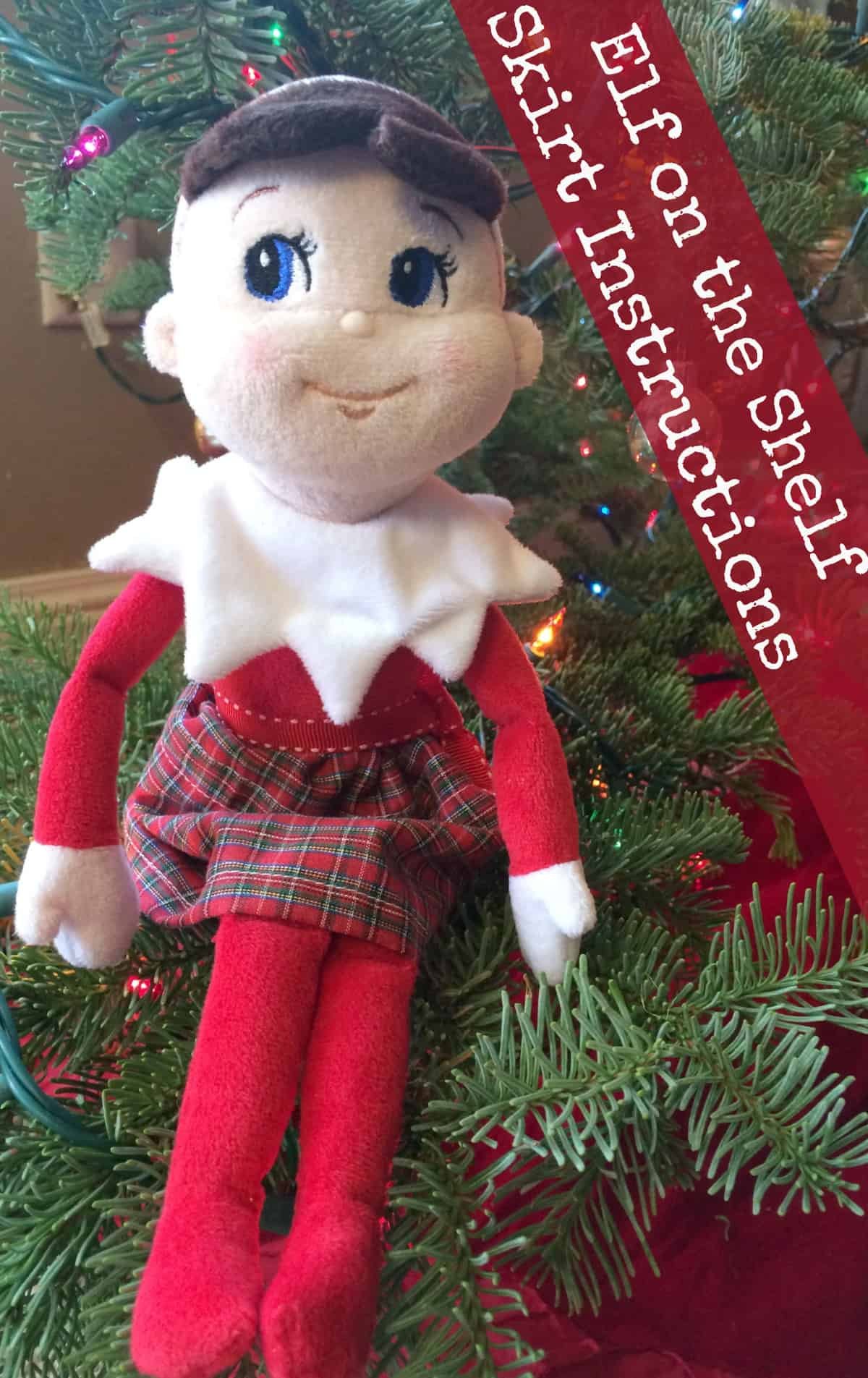
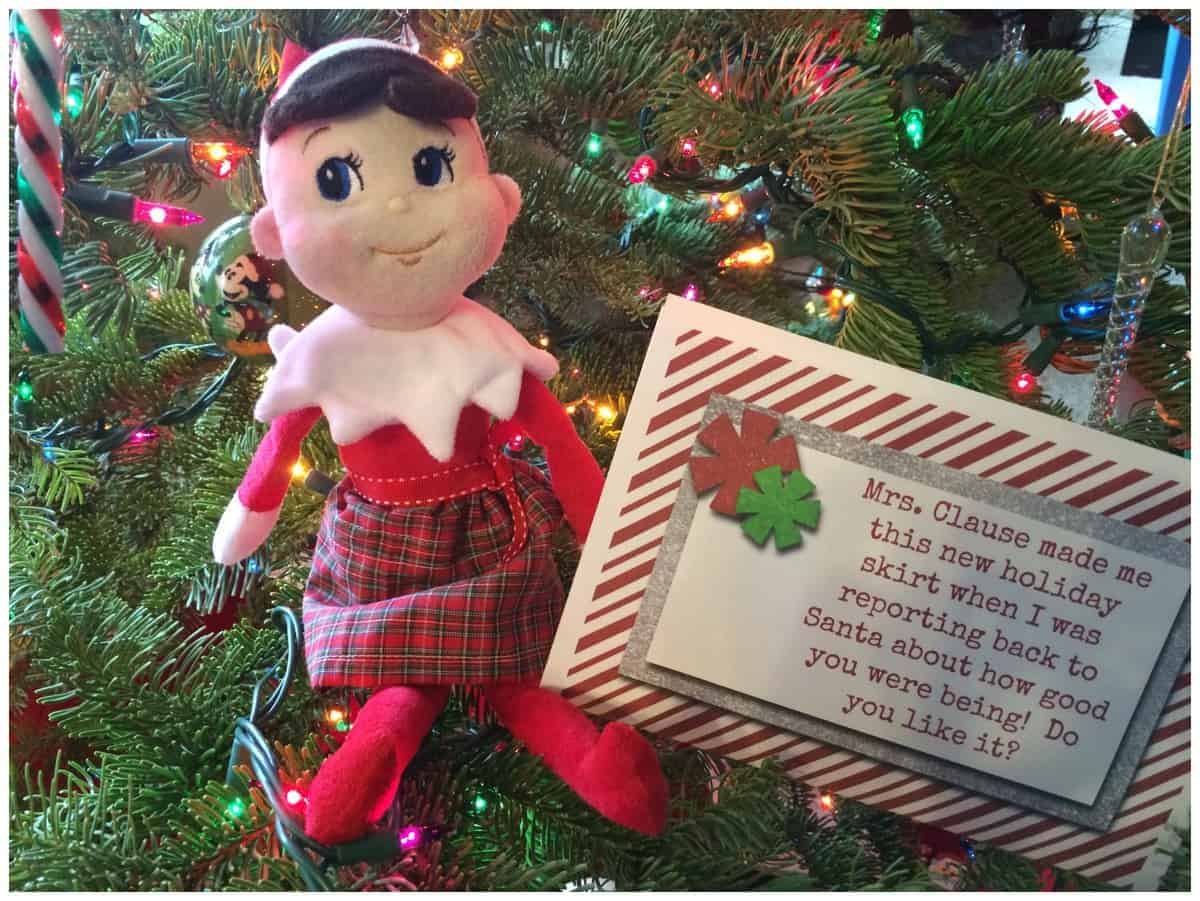
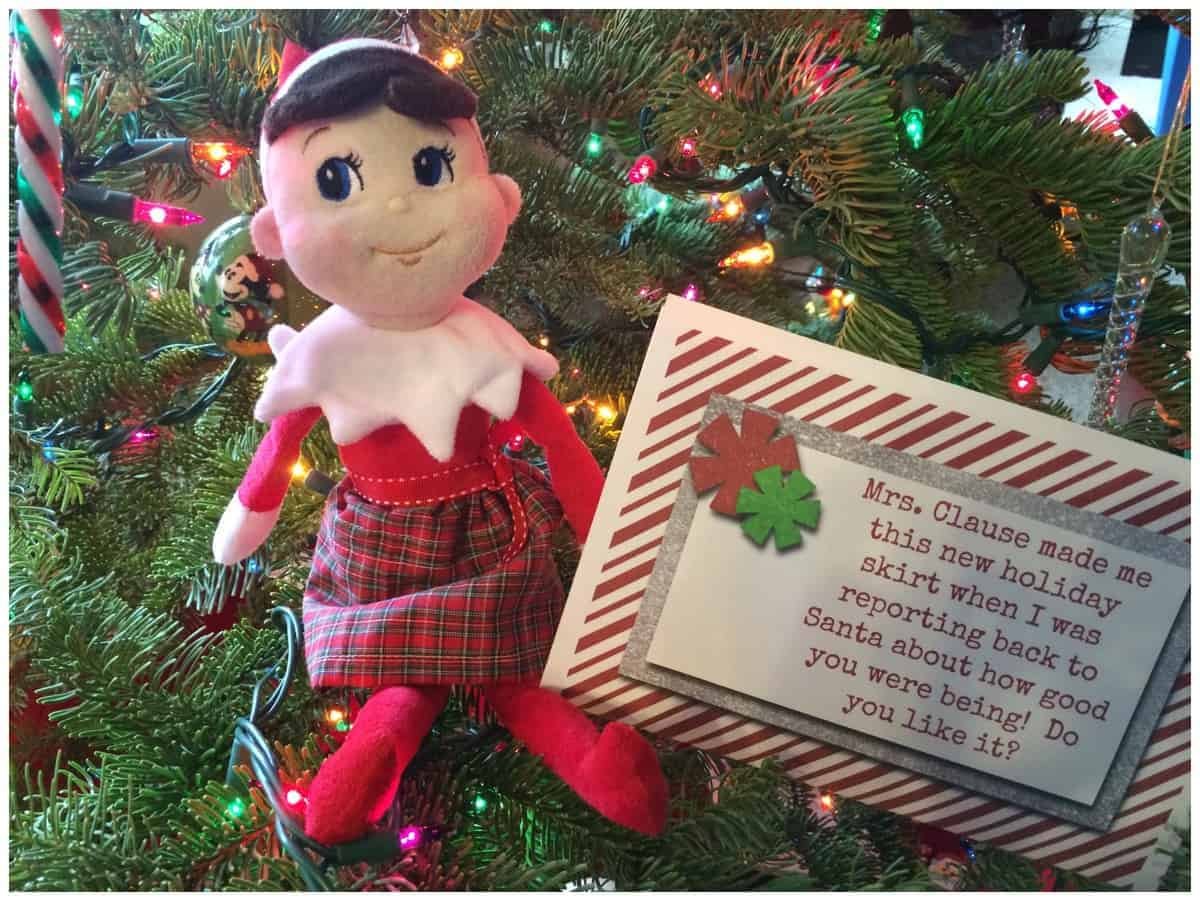
The original Craft Ideas skirt uses an 8 x 14-inch fabric rectangle and a 4-inch piece of elastic. Keep those measurements only if they fit the elf you are using. Before cutting good fabric, wrap paper or scrap fabric around the waist and confirm the finished length, fullness, and waistband size.
The existing skirt pattern and instruction images are retained with this section as visual references.
Simple Apron Pattern
The original apron uses a 4 x 5-inch bottom fabric piece, a 4 x 5-inch sheer overlay, and an 8-inch ribbon tie. Treat those as measurements for the original Craft Ideas project—not universal dimensions for every elf.
An apron is one of the easiest Elf clothing patterns to customize because the body is mostly flat and the ribbon tie provides adjustment around the waist.
Shirt Pattern
For a beginner shirt, trace the elf’s torso onto folded paper, leaving extra room around the body for movement and seam allowance. Keep the neckline large enough to dress the elf without forcing the head or hat through a tiny opening. An open-back shirt with a small hook-and-loop closure is easier than a fitted pullover.
Dress Pattern
A simple dress can be made from a short bodice plus a gathered rectangular skirt. Make the bodice from a soft knit or lightweight woven fabric, then add a back opening so the garment is easier to dress and remove.
Pants and Pajama Pattern
Trace around one side of the elf’s lower body to create a loose leg shape, then mirror the piece. Leave extra room at the waist and crotch so the pants can move over the doll without stressing the seams. Pajama pants are easier than fitted pants because the shape can stay loose.
Cape Pattern
A cape needs the least precise fit. Start with a small semicircle or tapered rectangle and add a narrow neck tie, ribbon, or removable closure. Felt and fleece work especially well because the raw edges can stay unfinished.
Hat Pattern
A simple cone or folded triangle creates an easy elf hat. Test the base width in paper first so the hat sits securely without being forced over the head.
How to Make Clothes for Elf on the Shelf
- Measure the elf. Record the chest, waist, torso length, arm length, and leg length needed for the garment you plan to make.
- Choose the fabric. Match the material to the garment. Felt is convenient for no-sew pieces; cotton is easy to press and sew; knit provides stretch but can be harder to control at a tiny scale.
- Create a simple paper pattern. Trace the body section or draw a geometric shape, then add room for seams, hems, gathers, and closures.
- Make a test piece. Use paper, felt, or scrap fabric before cutting special holiday fabric.
- Cut the final fabric. Transfer the adjusted pattern to the material and cut carefully.
- Sew or glue the garment. Work with small seams and keep bulky adhesive away from areas that need to bend.
- Test fit before finishing. Check the neckline, waist, arm openings, and closures while the garment is still easy to adjust.
- Add details last. Ribbon, pockets, trim, buttons, bows, and other embellishments should come after the main fit is correct.
The most important habit is to test the pattern on the actual elf before making multiple outfits from it. Once one shirt, skirt, or pair of pants fits correctly, save the paper pattern and reuse it as the base for future designs.
Easy No-Sew Elf Clothes
No-Sew Felt Skirt
Materials: felt scrap, narrow elastic or ribbon, fabric adhesive.
Pattern shape: rectangle or simple circle skirt.
Steps: test the waist opening, cut the felt, add elastic or ribbon at the waist, and let the adhesive set before dressing the elf.
Beginner tip: keep the skirt short enough that it does not interfere with the elf’s legs when you pose it.
No-Sew Cape
Materials: felt or fleece, ribbon, scissors.
Pattern shape: semicircle or tapered rectangle.
Steps: cut the cape, make a small neck opening or attach ribbon ties, then test the length while the elf is seated and standing.
Beginner tip: a cape is the easiest way to create a strong themed look because it does not need fitted sleeves.
Ribbon Scarf
Materials: soft ribbon or a narrow strip of fleece.
Pattern shape: long narrow strip.
Steps: cut to a comfortable length, wrap loosely around the neck, and trim the ends.
Beginner tip: avoid tying anything tightly around the neck; the scarf only needs to sit in place for display.
No-Sew Vest
Materials: felt, paper pattern, fabric adhesive if needed.
Pattern shape: simple front-and-back torso shape with open front.
Steps: make a paper test first, cut the felt, open the front, and adjust the arm openings until the vest slides on easily.
Beginner tip: an open-front vest avoids tiny closures.
Easy Sewn Elf Clothes for Beginners
1. Elastic-Waist Skirt
Materials: lightweight fabric, elastic, thread, safety pin.
Pattern shape: rectangle.
- Cut the rectangle after confirming the length and fullness on your elf.
- Finish the lower edge with a small hem.
- Sew the short ends together to form a tube.
- Create a narrow casing at the top.
- Feed the elastic through with a safety pin.
- Join the elastic ends and close the casing.
Beginner tip: make the casing only as wide as necessary for the elastic. Tiny garments become bulky quickly when folds stack on top of one another.
2. Simple Shirt
Materials: soft jersey or lightweight cotton, thread, small hook-and-loop closure.
Pattern shape: simple front and back torso pieces.
- Make the pattern in paper first.
- Cut front and back pieces with room for seams.
- Sew the shoulder and side seams.
- Leave the back open if the neckline is too small to dress easily.
- Add a small closure at the back.
Beginner tip: skip fitted sleeves on your first shirt. A sleeveless or cap-sleeve shape is easier to sew at this scale.
3. Pajama Pants
Materials: lightweight cotton or jersey, thread, narrow elastic if needed.
Pattern shape: two mirrored loose leg pieces.
- Trace a loose lower-body shape onto paper.
- Test it around the legs and waist.
- Cut two mirrored fabric pieces.
- Sew the leg and center seams.
- Finish the waist with elastic or a stretch casing.
Beginner tip: keep the pants loose. Tiny fitted trousers are much harder to turn, dress, and pose.
4. Simple Dress
Materials: cotton or knit fabric, thread, small closure.
Pattern shape: short bodice plus gathered rectangle skirt.
- Fit the bodice in paper or scrap fabric.
- Sew the bodice seams.
- Gather the skirt rectangle along the top.
- Attach the skirt to the bodice.
- Add a back closure.
Beginner tip: use one simple fabric instead of multiple thick layers for your first dress.
5. Elf Apron
Materials: lightweight bottom fabric, optional sheer overlay, ribbon, thread.
Pattern shape: rectangle or rounded apron panel.
The original Craft Ideas apron uses a 4 x 5-inch bottom layer, a 4 x 5-inch sheer layer, and an 8-inch ribbon. Use those measurements only after checking them against your elf.
- Finish the edges of the base fabric with a narrow hem.
- Round the lower edge of the overlay if you want a softer shape.
- Place the overlay on top of the base fabric.
- Center the ribbon across the top edge.
- Sew the ribbon and layers together.
- Tie the apron around the elf and adjust the ribbon length if necessary.
Beginner tip: the apron is easy to resize because the ribbon tie provides extra adjustment.
What Fabric Is Best for Elf on the Shelf Clothes?
| Fabric | Advantages | Limitations | Best for |
|---|---|---|---|
| Felt | Does not require a traditional hem; easy to cut | Can become bulky in layered seams | No-sew skirts, capes, hats, vests |
| Lightweight cotton | Easy to mark, press, and sew; many holiday prints | Raw edges can fray | Skirts, aprons, dresses, simple pants |
| Fleece | Soft and warm-looking; edges resist fraying | Thicker than cotton at tiny scale | Capes, scarves, hats |
| Jersey knit | Stretch makes dressing easier | Can curl or stretch while sewing | Shirts, pajamas, soft dresses |
| Sheer fabric | Adds a decorative layer without much visual weight | Can shift and fray while sewing | Apron overlays and dress details |
| Fabric scraps | Cheap and ideal for tiny garments | Only useful if weight and stretch suit the project | Nearly any small Elf outfit |
There is no single best fabric for every Elf outfit. Choose the fabric based on the pattern shape, seam bulk, stretch, and whether you plan to sew or glue it.
How to Size Elf on the Shelf Clothes
Measure the actual elf instead of relying on a universal chart.
Measurements to Take
- Chest: around the widest part of the torso.
- Waist: around the area where skirts, pants, or an apron will sit.
- Torso length: shoulder area to waist or desired shirt hem.
- Arm length: shoulder area to wrist for long sleeves.
- Leg length: waist or crotch area to the desired pant hem.
- Neck opening: only if a top must slide over the head rather than open at the back.
Add Room Before Cutting Final Fabric
A body measurement is not the same as a pattern measurement. Your pattern also needs room for seams, movement, hems, gathers, and closures. Make a quick paper or scrap-fabric version first, dress the elf, and adjust before using your final fabric.
For reusable patterns, write the garment name and fit notes directly on the paper pattern. This turns one successful fit into a base for future costumes.
DIY Elf Apron
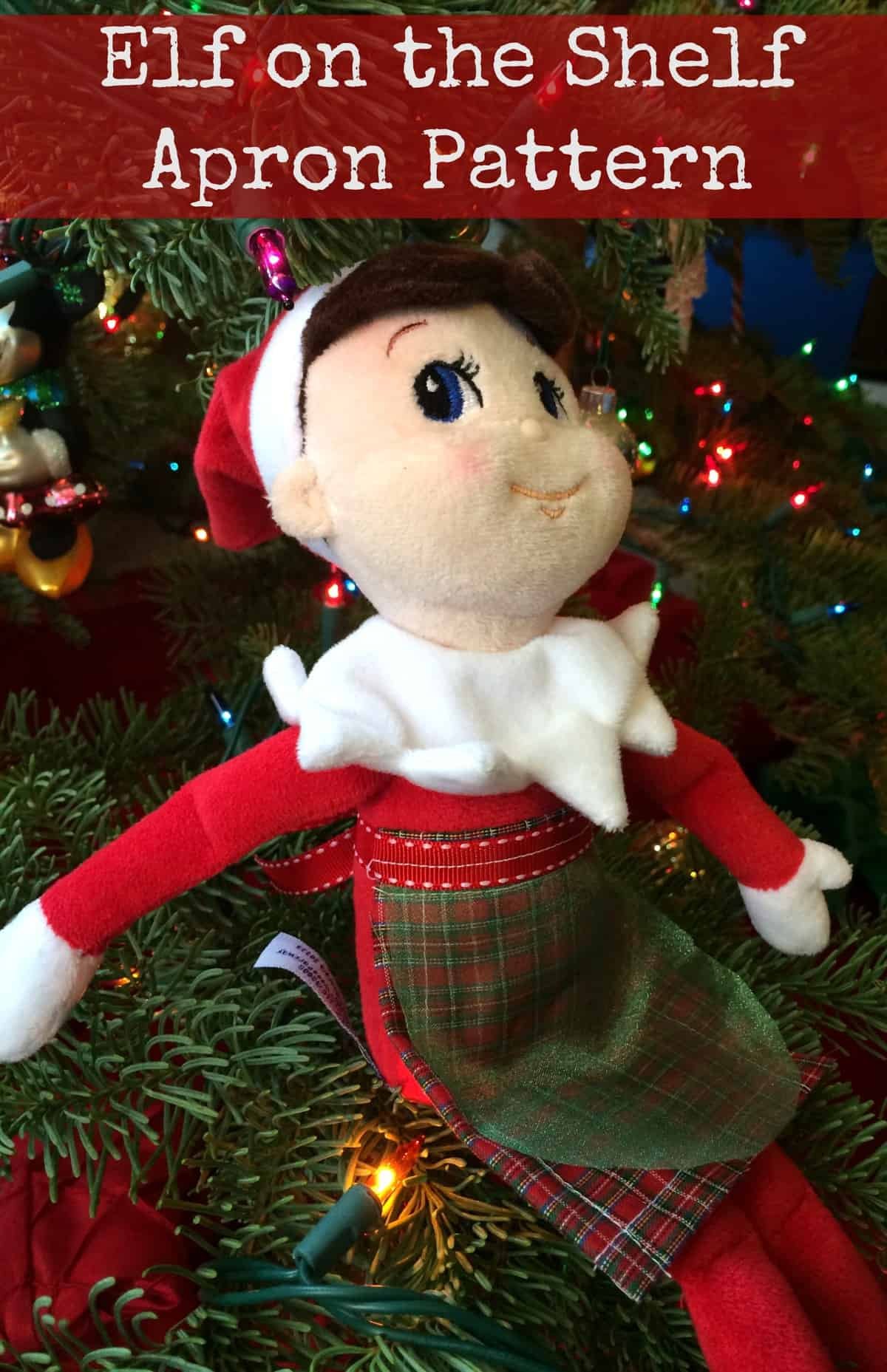
An apron deserves a place in a basic Elf wardrobe because it is flat, easy to resize, and works with many scenes—baking, cookies, hot cocoa, craft night, or a pretend workshop.
Simple Apron Pattern Shape
Start with a small rectangle or rounded trapezoid. Hold the paper shape against the elf and trim until the width and length look right. Add ribbon across the top for waist ties.
Sewn Version
Use lightweight cotton for the base. Finish the edges with a narrow hem, then sew the ribbon along the top. Add a second sheer layer only if you want the decorative look from the original Craft Ideas version.
No-Sew Apron
Cut the apron body from felt so the edges can stay unfinished. Attach ribbon with a fabric adhesive suitable for the materials, then let it set completely before tying the apron onto the elf.
Easy Customization
- Add a tiny pocket.
- Use striped ribbon for a candy-cane look.
- Add a small felt initial.
- Coordinate the fabric with a kitchen or cookie scene.
- Make several aprons from one paper pattern.
Easy Elf Outfit Ideas
- Christmas pajamas: loose pajama pants plus a soft knit top make a reusable outfit.
- Baker apron: pair a simple apron with a small paper or felt chef hat.
- Superhero cape: felt or fleece turns into a quick no-sew costume with almost no fitting.
- Holiday dress: combine a simple bodice with a gathered skirt in a Christmas print.
- Winter scarf: cut a narrow strip of fleece and add tiny fringe at the ends.
- Elastic skirt: use the original Craft Ideas skirt as a reusable base pattern after test fitting.
- Open-front vest: felt creates an easy layered look without a closure.
- Santa-style outfit: use red felt or fleece for a vest, cape, or simple skirt and add white trim sparingly.
- Sports outfit: start with a simple shirt or vest and add a paper or fabric team number.
- Simple T-shirt: use a soft knit and an open-back closure to make dressing easier.
Tips for Making Tiny Elf Clothes
Keep Seam Allowances Narrow but Usable
Tiny garments have very little space for thick folded seams. Use a seam allowance you can sew accurately, then trim bulk where construction allows it.
Test Fit Before Finishing Hems
It is easier to adjust a shirt, skirt, or pair of pants before every edge has been finished.
Use Closures Strategically
A small hook-and-loop tab, ribbon tie, snap, or elastic waist is often easier than miniature buttons and buttonholes.
Avoid Bulky Layers
Fleece, felt, gathered fabric, elastic, and adhesive all add thickness. Use them selectively so the clothing still bends with the elf.
Make Tiny Hems Only When the Fabric Needs Them
Felt and fleece can often stay raw. Woven cotton generally benefits from a hem or another edge finish.
Save Every Successful Paper Pattern
Once a shape fits, label it and reuse it. A good basic torso, skirt, pants, and apron pattern can generate many themed outfits.
Use Scraps Before Buying Fabric
Elf garments use very little material. Leftover cotton, felt, fleece, ribbon, and knit scraps are often enough for multiple pieces.
Frequently Asked Questions
How do you make clothes for Elf on the Shelf?
Measure your own elf, make a simple paper pattern, test the pattern with paper or scrap fabric, then cut the final material and sew or glue it according to the design. Test fit the garment before adding final hems, closures, and decorations.
What fabric is best for Elf clothes?
The best fabric depends on the garment. Felt is convenient for no-sew pieces, lightweight cotton is easy to sew and press, fleece works well for capes and scarves, and jersey knit adds stretch for tops and pajamas. Avoid fabric that becomes too bulky at tiny seams.
Can you make Elf on the Shelf clothes without sewing?
Yes. Felt and fleece are especially useful for no-sew capes, skirts, scarves, vests, and hats because their edges do not need a traditional hem. Ribbon, hook-and-loop tape, and suitable fabric adhesive can be used for closures and simple assembly.
How do you make a pattern for Elf on the Shelf clothes?
Trace the relevant body section onto paper, add room for seams and movement, then make a test version before cutting the final fabric. Simple shapes work best: rectangles for skirts and aprons, mirrored leg pieces for pants, and basic front-and-back torso shapes for shirts.
What size are Elf on the Shelf clothes?
There is no measurement in this guide that should be treated as universal. Measure the actual elf you own because fit can vary with body shape, stuffing, pose, and the specific garment. Use the original Craft Ideas skirt and apron measurements only as references for those projects.
Can you use felt for Elf clothes?
Yes. Felt works especially well for capes, skirts, hats, vests, and simple no-sew costumes because the cut edges stay tidy without a traditional hem. Keep layered seams minimal because felt can become bulky at elf scale.
What is the easiest Elf outfit to make?
A cape is one of the easiest because it needs very little fitting. An elastic-waist skirt and a flat apron are also beginner-friendly. For a first project, choose a design without fitted sleeves, tiny buttons, or multiple curved seams.
More Craft Ideas for Sewing and Christmas
For more beginner sewing inspiration, see The Best Sewing Projects for Kids. You can also browse the Kids Crafts and Christmas Craft Ideas collections.
If you make a no-sew version with hot glue, review the Craft Ideas hot glue gun guide first. For another no-sew fabric project, see the Folded Fabric Scandinavian Star Ornament.
Existing Elf Product Links
The original article included the following Elf-related Amazon links. They are retained here so existing affiliate destinations are not changed.
2023 Elf Kit 24 Days of Christmas, New Christmas Elf Kit, Fun Elf Accessories, Elf Mischief, Prop Pack, Elf Antics, Christmas Countdown Gift for Children, Best Christmas Countdown Gift (12 Days Kit)
Buy Now
Christmas Elf
Christmas Elf
Final Takeaway
The most useful Elf on the Shelf clothes patterns are not necessarily the most complicated. Start with a few reliable shapes—a skirt, apron, cape, simple top, and loose pants—then reuse those patterns with different fabrics and trims.
Measure your own elf, keep tiny seams and closures simple, test everything in scrap material first, and choose no-sew methods when they make the project faster without making the garment bulky. Once one pattern fits well, save it: that single paper piece can become the base for an entire holiday wardrobe.