

The best fabric markers are the ones that match the fabric, tip style, and care routine of the project. For light cotton and T-shirts, a permanent textile marker with controlled ink flow is usually the safest starting point. For dark fabric or canvas, an opaque marker is more useful. And if you need crisp lettering rather than broad fills, a fine tip matters more than having the largest color set.
This guide focuses on decorative and permanent fabric markers for drawing on cotton, T-shirts, canvas, bags, and other textile projects. It does not cover temporary sewing-layout pens, disappearing quilting markers, or water-erasable marking tools.
Best Fabric Markers — Quick Picks
Jump to:
| Best for | Product | Tip type | Fabric use | Heat setting |
|---|---|---|---|---|
| Best overall | Tulip Dual-Tip Fabric Markers Rainbow 14 Pack | Brush + extra-fine | Light-colored clothing, shoes, bags, backpacks | No |
| Best for cotton | Crayola Fine Line Fabric Markers 10 Count | Fine line | 100% cotton and cotton/polyester blends | Yes |
| Best for T-shirts | edding 4500 Textile Marker | 2–3 mm round | Light-colored cotton, linen, silk, mixed fabrics | Yes |
| Best permanent brush tip | Sharpie Stained Fabric Markers 8 Count | Brush | Clothing, backpacks, shoes, assorted fabrics | No |
| Best for dark fabric and canvas-style projects | Tulip Bullet-Tip Fabric Paint Markers Rainbow 15 Pack | Bullet | Light and dark fabrics, clothing, shoes, bags | No |
| Best fine-tip control | edding 4600 Textile Pen | 1 mm round | Light-colored cotton, silk, linen | Yes |
| Best mixed-tip set | Tulip Fine Tip & Brush Tip Fabric Markers Ultimate Rainbow 24 Pack | Fine + brush | Light-colored clothing, shoes, bags, backpacks | No |
| Best for permanent labeling | Sharpie Rub-a-Dub Laundry Marker | Fine | Cloth and synthetics | Not specified as required |
Fastest decision: choose Tulip Dual-Tip if you want one versatile set for both detail and broader strokes; Crayola Fine Line if you are working mainly on cotton and want precise lines; edding 4500 for a heat-fixed T-shirt design; Tulip Opaque/Bullet-Tip markers for darker fabric; and Sharpie Stained if you want a flexible brush tip without a separate heat-setting step.
How We Chose the Best Fabric Markers
This ranking is based on current manufacturer documentation, product purpose, tip design, fabric compatibility, permanence instructions, and care requirements. It does not claim hands-on testing that has not been documented.
- Tip control: fine tips help with outlines and lettering; brush tips give line variation and cover larger areas more quickly.
- Fabric compatibility: some markers are intended for light cotton, while opaque fabric paint markers are better suited to dark textiles.
- Permanence: “permanent” only means the maker designed the ink to remain after the stated curing and care process. It does not mean fade-proof under every condition.
- Heat setting: some products require ironing; others specifically say no heat setting is needed.
- Wash care: follow the marker manufacturer’s instructions rather than using one universal wash routine.
- Bleed control: fabric weave, absorbency, marker pressure, and repeated passes can all affect how much ink spreads.
- Coverage: a fine line marker is efficient for detail but slow for large filled areas. A brush or broader bullet tip is more practical for larger motifs.
- Value: the right tip and fabric compatibility matter more than simply buying the largest or cheapest set.
Best Fabric Markers for Cotton
Cotton is one of the easiest fabrics to decorate, but it is also absorbent. That means a marker can feather if you press too hard, repeatedly work over a wet line, or draw on a loose weave.
Crayola Fine Line Fabric Markers are the clearest cotton-specific pick in this guide because Crayola explicitly recommends them for 100% cotton and cotton/polyester blends. The fine tip makes them better for lettering and detailed motifs than for quickly filling large areas. Crayola requires ironing from the reverse side to fix the color.
Tulip Dual-Tip Fabric Markers are more versatile if you want both detail and fill. The extra-fine end handles outlines and small elements, while the brush end is faster for broader strokes. Tulip markets this set for light-colored fabrics and says the ink is permanent and machine washable without heat setting.
What matters most on cotton
- Use a barrier between fabric layers so ink does not transfer to the back.
- Test the marker on scrap fabric or an inconspicuous area first.
- Use light passes instead of saturating one point with ink.
- Let the design dry or cure according to the product instructions.
- Heat-set only when that specific marker requires it.
- Follow the product’s washing instructions instead of assuming all permanent markers have the same care routine.
Best Fabric Markers for T-Shirts
T-shirts add another variable: the fabric moves and stretches while you draw. A marker that works well on a flat tote bag may feel less controlled on a soft jersey shirt.
edding 4500 Textile Marker is a strong T-shirt choice for light-colored cotton because the manufacturer specifically recommends it for textile decoration and gives precise fixing instructions. Its 2–3 mm round nib is wide enough for normal drawing and filling without becoming a jumbo marker. After the design is complete, edding requires heat-fixing with an iron without steam before the fabric reaches its stated wash resistance.
Tulip Dual-Tip is the better choice when you want one marker body to handle outlines and broad accents. It does not require heat setting, which simplifies projects where you want to finish the design without adding an ironing step.
Cotton vs cotton blends
Do not assume every T-shirt behaves like 100% cotton. Polyester content, fabric finish, knit structure, and stretch can change how ink moves through the fibers. Check the marker’s compatible-material guidance and test first on blends.
For large filled areas
Choose a brush or broader bullet tip instead of repeatedly scribbling with a fine point. Repeated passes can increase saturation and make bleeding more likely on absorbent T-shirt fabric.
Best Permanent Fabric Markers
A permanent fabric marker is designed to remain on fabric after the manufacturer’s required fixing or curing process. That does not automatically mean the design is bleach-proof, unaffected by every detergent, permanent on every fiber, or guaranteed never to fade.
Sharpie Stained Fabric Markers are a useful no-heat-set permanent choice. Sharpie says the brush-tip ink is designed to resist fading during normal wash cycles and adhere to a wide array of fabric surfaces. The brush tip can create both thin and thick lines.
edding 4500 and 4600 take a different approach: the design becomes permanent and wash-resistant after ironing without steam. The 4500 uses a broader 2–3 mm round nib; the 4600 uses a 1 mm nib for detail.
Crayola Fine Line Fabric Markers are also permanent after their specified heat-fixing process. Crayola’s current instructions explicitly call for ironing on the reverse side.
Best Fabric Markers for Canvas
Canvas tote bags and canvas shoes have a coarser texture than a smooth cotton T-shirt. The weave can make a very fine tip catch or skip, and the thicker surface can require more deliberate strokes.
For dark or heavily colored canvas-style projects, Tulip Bullet-Tip Fabric Paint Markers are the strongest option in this group because Tulip specifically markets the opaque formula for both light and dark fabrics. The 15-pack includes standard colors plus white, gold, and silver, and the bullet tip is intended for doodling, stenciling, coloring, and writing.
For light canvas where detail matters more than opacity, Tulip Dual-Tip gives you a fine point for outlines and a brush end for broader color. If you use any marker on canvas shoes or bags, test on a hidden area first because fabric coating and surface treatments can affect adhesion and color.
Fine Tip vs Brush Tip Fabric Markers
| Fine tip | Brush tip | |
|---|---|---|
| Detail work | Strong | Moderate to strong with practice |
| Small lettering | Strong | Better for expressive lettering |
| Filling large areas | Slow | Faster |
| Line variation | Limited | Strong |
| Beginner control | Predictable for outlines | Requires more pressure control |
| Best examples here | edding 4600, Crayola Fine Line | Sharpie Stained, Tulip brush-tip products |
A bullet tip sits between these two extremes. It is useful for general drawing, writing, and moderate fill work without the flexibility of a brush tip.
The 8 Best Fabric Markers Reviewed
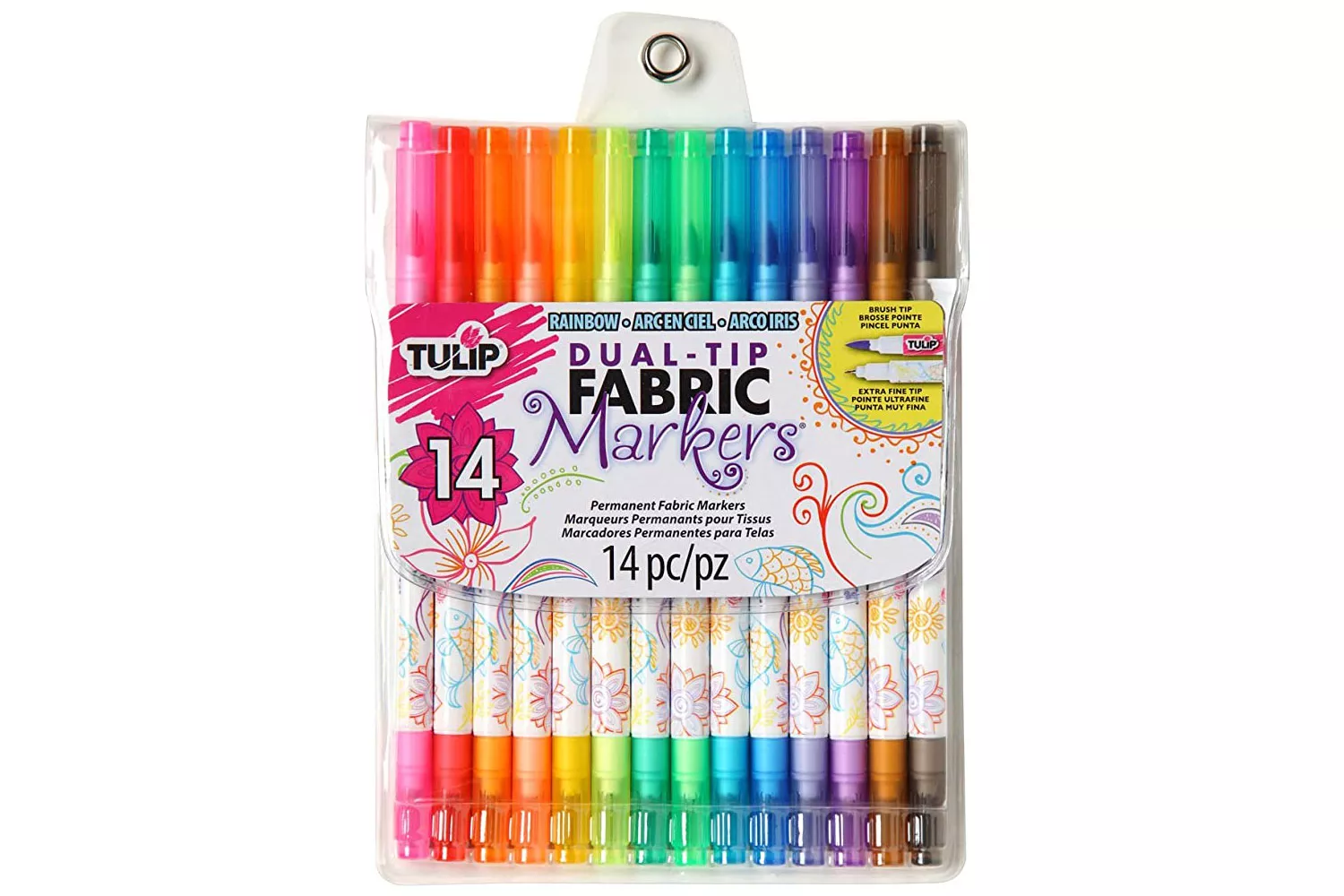
1. Tulip Dual-Tip Fabric Markers Rainbow 14 Pack — Best Overall
Best for: T-shirts, cotton projects, mixed detail and fill work
Tip type: Brush + extra-fine
Fabric compatibility: Light-colored clothing, shoes, bags, backpacks, and other fabric craft surfaces
Color count: 14 markers in the current Rainbow pack
Heat setting: Not required
Wash instructions: Manufacturer describes the ink as machine washable; follow current package care directions
Main strength: Two useful tip styles in one marker
Main limitation: Standard version is intended for light-colored fabrics
Tulip Dual-Tip is the most balanced pick because the two ends solve two different fabric-design problems. The extra-fine tip is made for writing, doodling, and detailed lines. The brush tip is faster for broad accents, stenciling, and filling.
Tulip’s current Rainbow 14 Pack is marketed as permanent on light-colored fabrics, machine washable, and requiring no heat setting. That makes it easier for a beginner who does not want to manage separate curing temperatures or ironing steps.
The limitation is equally important: if your project is black denim or a dark canvas shoe, do not expect a standard transparent fabric ink to behave like opaque paint. Move to the Tulip Fabric Paint Marker pick below when opacity matters.
Choose it if: you want one set for T-shirt lettering, outlines, doodles, and moderate filling.
2. Crayola Fine Line Fabric Markers 10 Count — Best for Cotton
Best for: cotton T-shirts, cotton/poly blends, fine details
Tip type: Fine line
Fabric compatibility: Best on 100% cotton and cotton/polyester blends according to Crayola
Color count: 10
Heat setting: Required
Wash instructions: Fix the colors according to Crayola’s ironing instructions before normal garment care
Main strength: Clear cotton-specific manufacturer guidance
Main limitation: Fine tips are slower for large filled areas
Crayola earns the cotton pick because its product instructions are unusually specific. The markers are designed for 100% cotton and cotton/polyester blends, and the fine point is intended for intricate designs.
The set is not a no-heat solution. Crayola instructs users to put a barrier under the drawing area, apply light layers of ink, and have an adult iron on the reverse side to fix the colors. That makes the product less convenient than a no-heat Tulip marker, but the instructions are clear and easy to follow.
This is a better choice for names, outlines, small motifs, and detailed T-shirt art than for coloring a large block of fabric.
Choose it if: your main project is light cotton and line precision matters.
3. edding 4500 Textile Marker — Best for T-Shirts
Best for: light-colored T-shirts, cotton and linen projects
Tip type: 2–3 mm round nib
Fabric compatibility: Most light-colored textiles such as cotton, silk, and linen; edding notes limited suitability on polyester
Color count: Multiple standard and neon colors; availability can vary by market
Heat setting: Required
Wash instructions: After ironing without steam, edding states the design is wash-resistant up to 60°C
Main strength: Clear fabric and wash-care documentation
Main limitation: Requires an iron; not the best pick for dark textiles
The edding 4500 is a practical T-shirt marker because the manufacturer treats clothing decoration as a core use case, not an afterthought. The 2–3 mm round nib works for regular lines and moderate fill areas without being too broad for lettering.
Unlike Tulip’s no-heat-set markers, the 4500 requires heat fixing. edding instructs users to iron the completed design without steam; only after that fixing step does the company describe the design as wash-resistant up to 60°C.
edding also advises placing cardboard under the fabric so ink does not transfer through to the second layer. That simple step is useful on thin T-shirt jersey regardless of the marker brand.
Choose it if: you want a traditional heat-fixed textile marker with clearly documented cotton use.
4. Sharpie Stained Fabric Markers 8 Count — Best Permanent Brush Tip
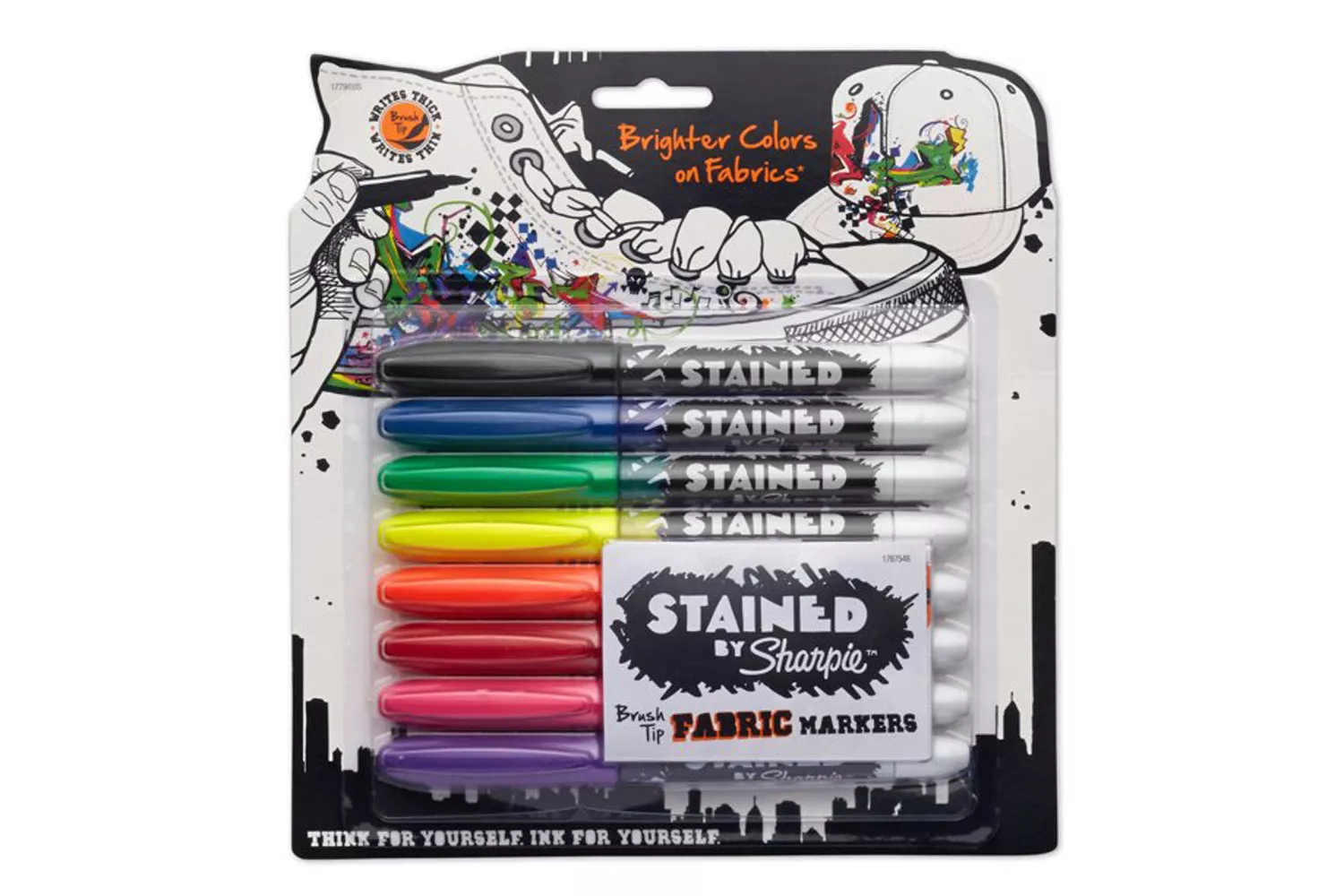
Best for: lettering, expressive lines, clothing, backpacks, shoes
Tip type: Brush
Fabric compatibility: Wide variety of fabric surfaces
Color count: 8
Heat setting: Not required according to Sharpie product guidance
Wash instructions: Sharpie recommends fabric-aware care and states the ink resists fading during normal wash cycles
Main strength: Flexible brush tip for thick and thin strokes
Main limitation: Brush tips take more pressure control than a rigid fine point
Sharpie Stained is not the same product as a regular permanent Sharpie. It is specifically designed for fabric, with a brush tip that can create thin lines or broader strokes depending on pressure and angle.
The current 8-count set includes black, blue, green, yellow, orange, red, pink, and purple. Sharpie says the ink adheres to a wide range of fabric surfaces and is designed to resist fading during normal wash cycles.
This is a good choice for names, hand lettering, decorative borders, and motifs where line variation is part of the design. If you want a ruler-straight 1 mm line, choose edding 4600 instead.
Choose it if: you want expressive brush lettering without a separate heat-setting process.
5. Tulip Bullet-Tip Fabric Paint Markers Rainbow 15 Pack — Best for Dark Fabric
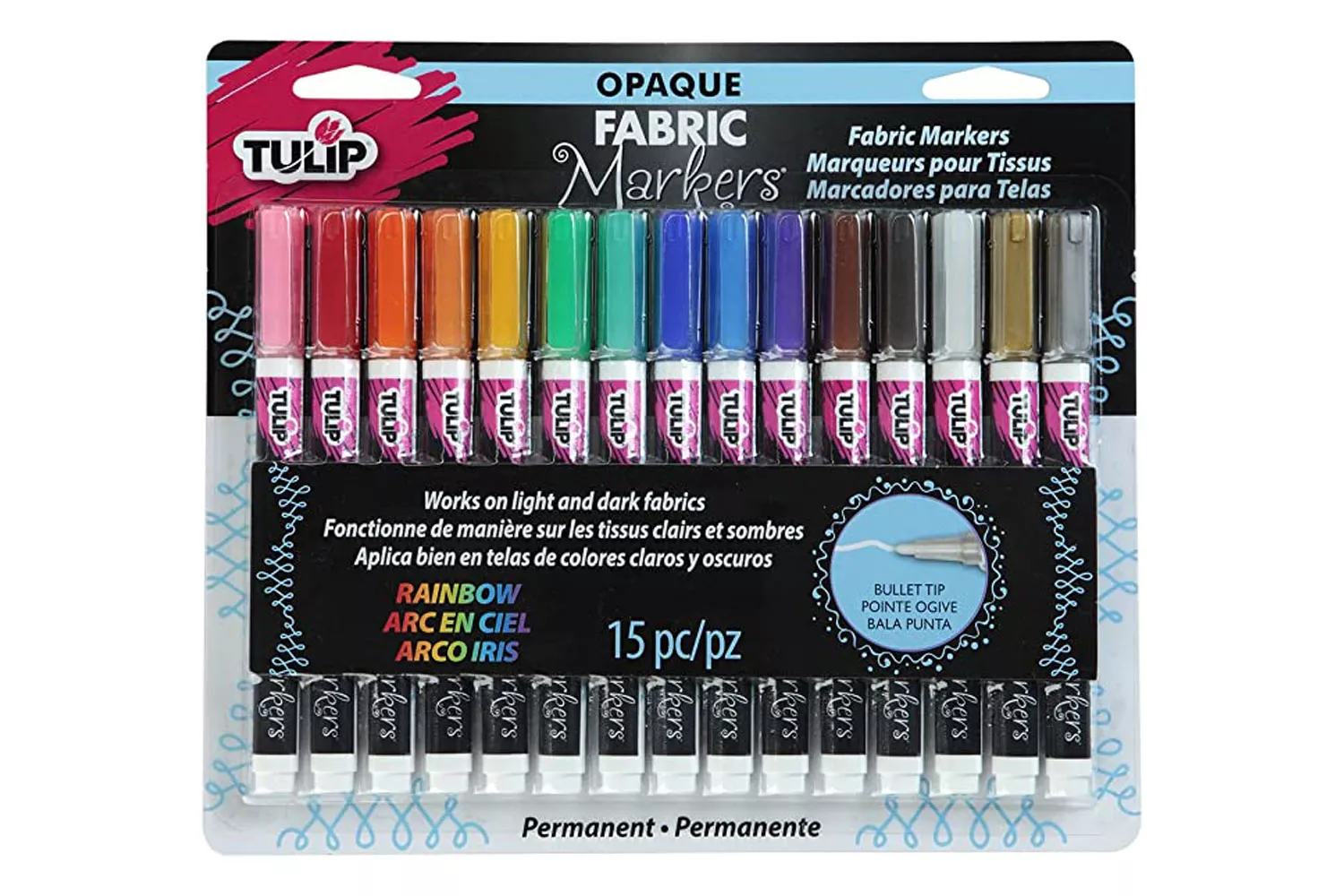
Best for: dark fabric, canvas-style projects, shoes, bags, stencils
Tip type: Bullet
Fabric compatibility: Light and dark fabrics
Color count: 15, including white, gold, and silver
Heat setting: Not required on the current Rainbow 15 Pack product instructions
Wash instructions: Tulip describes the markers as machine washable; follow current care directions
Main strength: Opaque-style colors for dark as well as light textiles
Main limitation: Bullet tip gives less line variation than a brush tip
Dark fabric changes the buying decision because translucent ink can disappear visually against black or deeply colored fibers. Tulip’s Fabric Paint Marker line is designed for both light and dark fabrics, making it much more useful for black shirts, dark bags, and colored canvas.
The current Rainbow 15 Pack uses bullet tips and includes white, gold, and silver alongside the standard colors. The bullet nib is suited to doodling, stenciling, writing, and moderate fill work.
This is the most relevant current replacement for the article’s older “best for black fabric” intent because the manufacturer directly supports use on dark textiles.
Choose it if: opacity on dark material is more important than having the finest possible line.
6. edding 4600 Textile Pen — Best Fine-Tip Control
Best for: fine lettering, outlines, detailed patterns
Tip type: 1 mm round nib
Fabric compatibility: Light-colored cotton, silk, linen, and similar textiles
Color count: 20 colors in the current edding range
Heat setting: Required
Wash instructions: After ironing without steam, edding states the design is wash-resistant up to 60°C
Main strength: Precise 1 mm line
Main limitation: Slow for large areas
The edding 4600 is the detail-focused partner to the 4500. Its 1 mm round nib is designed for fine patterns, lettering, outlines, and smaller decorative work.
Like the 4500, it uses a heat-fixing workflow: complete the design, iron the fabric without steam, then follow the stated textile care guidance. edding also recommends using cardboard under the fabric during drawing.
This is a better choice than a brush marker when you need predictable line width for names, geometric patterns, or small decorative details.
Choose it if: precision matters more than fast coverage.
7. Tulip Fine Tip & Brush Tip Fabric Markers Ultimate Rainbow 24 Pack — Best Mixed-Tip Set
Best for: larger mixed projects, groups, lettering plus broad accents
Tip type: 12 fine-tip markers + 12 brush-tip markers
Fabric compatibility: Light-colored clothing, shoes, bags, backpacks, and fabric craft surfaces
Color count: 24 markers total
Heat setting: Not required
Wash instructions: Manufacturer describes the inks as machine washable
Main strength: Separate fine and brush markers in one kit
Main limitation: More markers than a casual one-off project needs
This set makes sense when one person—or a group—needs both controlled fine lines and broad brush strokes. Rather than putting two tips in the same barrel, the pack includes separate fine-tip and brush-tip markers.
Tulip describes the inks as permanent once dry, machine washable, and not requiring heat setting. Like the standard Dual-Tip set, this line is intended for light-colored fabrics.
The larger set is useful for parties, classroom-style projects, tote-bag decorating, or a household that regularly customizes fabric. For one T-shirt, the smaller Dual-Tip pack is usually more practical.
Choose it if: you want a larger versatile kit and will actually use both tip styles.
8. Sharpie Rub-a-Dub Laundry Marker — Best for Permanent Labeling
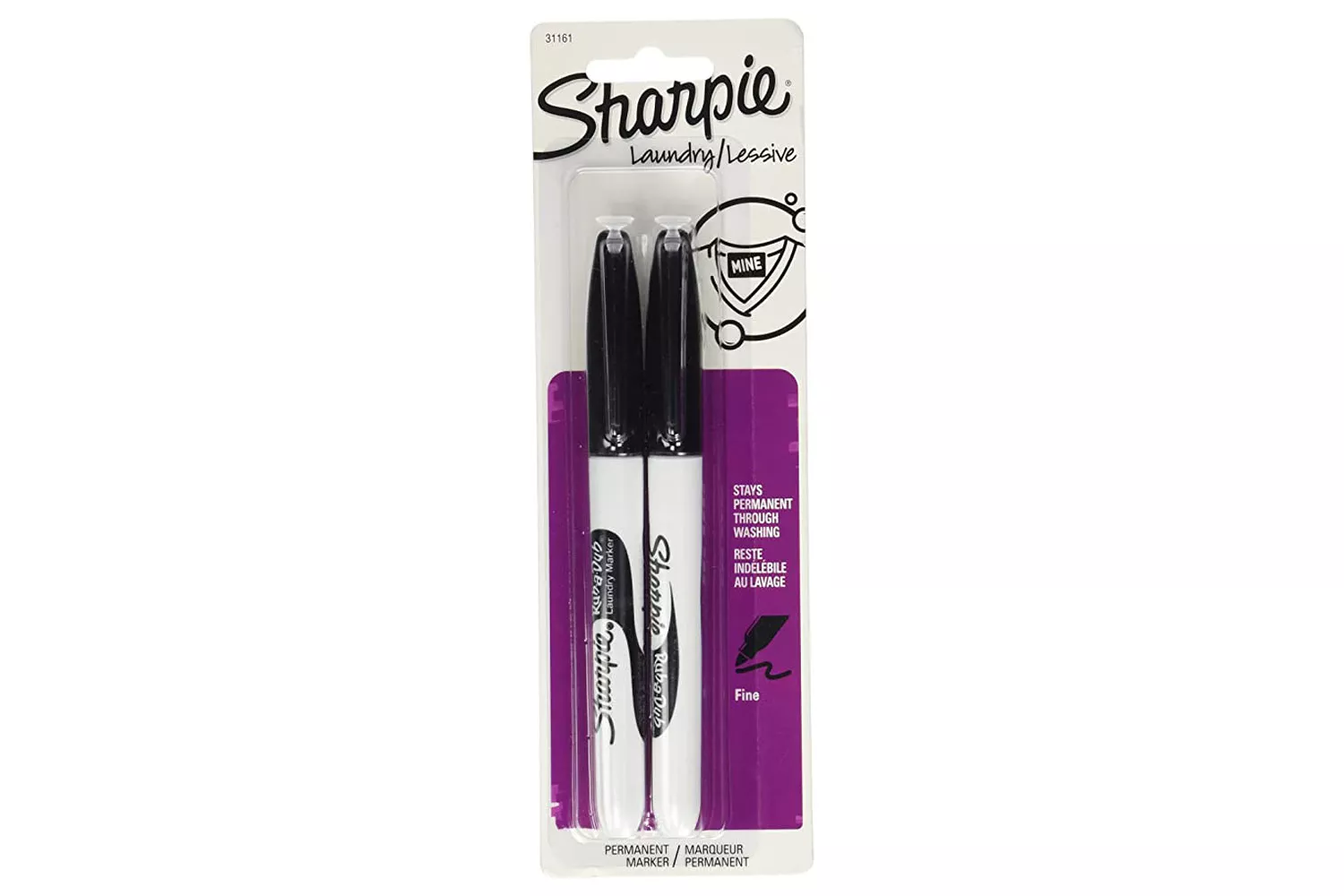
Best for: names, laundry labels, school or camp clothing
Tip type: Fine
Fabric compatibility: Cloth and synthetics
Color count: Black marker
Heat setting: Sharpie does not present heat setting as a required step on the current product page
Wash instructions: Sharpie states the ink stays permanent through washing and dry cleaning
Main strength: Simple, durable fabric labeling
Main limitation: Not a multicolor art set
Rub-a-Dub is not the marker to buy for a rainbow illustration. It earns its place because permanent labeling is a real fabric-marker use case, and Sharpie publishes unusually direct wash claims for it.
The fine black marker is designed to mark cloth without feathering and remain through washing and dry cleaning. That makes it useful for children’s clothing, uniforms, bedding, camp gear, and other items where identification matters more than decorative color.
It is also a good example of why “best fabric marker” depends on the project. A single black laundry marker can outperform an expensive art set when the only goal is a durable name label.
Choose it if: you need permanent identification, not multicolor artwork.
How to Use Fabric Markers on Cotton
- Check the manufacturer’s prep instructions. Some products benefit from clean, untreated fabric; do not assume every marker requires the same prewash routine.
- Put a barrier under the fabric. Cardboard or sturdy paper prevents ink from transferring to the back layer of a shirt or bag.
- Test first. Use a scrap of the same fabric or a hidden area to check spread, color, and opacity.
- Start with light pressure. Add color gradually rather than saturating the fibers immediately.
- Let the design dry as directed. Do not stack or fold wet fabric.
- Heat-set only when required. Crayola and edding require heat fixing; the Tulip products in this roundup state that heat setting is not required.
- Follow the specific wash instructions. Do not apply one temperature, detergent, or waiting period to every brand.
Do Fabric Markers Need to Be Heat-Set?
Some do, and some do not.
In this roundup, Tulip Dual-Tip, Tulip Bullet-Tip Fabric Paint Markers, Tulip Fine + Brush Tip markers, and Sharpie Stained do not require an ironing step according to current manufacturer guidance.
Crayola Fine Line Fabric Markers require ironing from the reverse side to fix the color. edding 4500 and edding 4600 also require ironing without steam before the design reaches the stated wash resistance.
Do not use a universal instruction such as “iron for five minutes.” Follow the package or manufacturer page for the exact marker in your hand.
How to Stop Fabric Markers From Bleeding
You cannot guarantee zero bleeding on every fabric, but you can reduce it.
- Use tightly woven fabric when possible.
- Put cardboard or heavy paper under the drawing area.
- Test on scrap fabric first.
- Use lighter pressure for the first pass.
- Avoid holding the tip in one spot.
- Let a line dry before repeatedly drawing over it.
- Match tip size to the job instead of forcing a fine tip to fill a large area.
- Be cautious with polyester-heavy blends unless the manufacturer specifically supports them.
Bleeding is a fabric-plus-ink interaction, not just a marker quality issue. An absorbent or loose weave can make even a good marker spread more than expected.
How to Make Fabric Marker Designs Last Longer
Start with the marker’s own curing and care directions. Permanence depends on using the product the way it was designed.
- Complete any required heat-fixing step.
- Allow the design to dry or cure before washing.
- Use the recommended wash temperature.
- Turn garments inside out when the manufacturer recommends it.
- Avoid unsupported treatments such as bleach unless the product specifically claims compatibility.
- Do not assume a “permanent” label means unlimited fade resistance.
If wash durability is important, create a small swatch from the same fabric and run it through your normal laundry routine before committing to a large design.
Frequently Asked Questions
What are the best fabric markers?
Tulip Dual-Tip Fabric Markers are the most versatile overall pick in this guide because one marker provides both a brush tip and an extra-fine tip. The best choice changes by project: Crayola is strong for fine cotton work, Tulip Fabric Paint Markers suit dark textiles, and edding 4500/4600 are useful when you want a heat-fixed textile system.
What fabric markers work best on cotton?
Crayola Fine Line Fabric Markers are specifically recommended by Crayola for 100% cotton and cotton/polyester blends. Tulip Dual-Tip and edding 4500 are also suitable options for light cotton projects. Test first because weave and absorbency affect how ink spreads.
What are the best permanent fabric markers?
Sharpie Stained, Tulip’s permanent fabric marker lines, Crayola Fine Line after heat fixing, and edding textile markers after ironing are all designed for permanent fabric use. Their fixing and wash-care instructions differ, so “permanent” does not mean they should all be treated the same way.
What markers work best on T-shirts?
For light cotton T-shirts, edding 4500 offers a practical 2–3 mm tip and a documented heat-fixing process. Tulip Dual-Tip is more convenient when you want both detail and broader strokes without heat setting. For dark T-shirts, use an opaque fabric marker such as Tulip Fabric Paint Markers.
Do fabric markers wash out?
Permanent fabric markers are designed to resist normal washing when they are fixed, cured, and washed according to the manufacturer instructions. Results can still vary by fabric, detergent, temperature, and product. Temporary sewing markers are a separate category and are intentionally designed to disappear.
Do fabric markers need to be heat-set?
Not always. Some current Tulip and Sharpie fabric markers do not require heat setting. Crayola Fine Line and edding 4500/4600 require ironing as part of their fixing process. Always check the exact marker instructions.
Can you use regular permanent markers instead of fabric markers?
You can physically draw on fabric with many general permanent markers, but they are not automatically optimized for wash durability, fabric feel, or textile care. If the item will be worn or washed repeatedly, a marker specifically designed for fabric gives you clearer usage and care instructions.
What type of marker works best on canvas?
For rough or dark canvas, a broader bullet or opaque fabric paint marker is usually easier to control than a very fine transparent marker. Tulip Bullet-Tip Fabric Paint Markers are a good fit when opacity matters. Test on coated canvas shoes or treated bags because surface finishes can change adhesion.
Do fabric markers bleed?
They can. Bleeding depends on ink flow, fabric weave, absorbency, pressure, and how many passes you make. Use a barrier under the fabric, test first, and build color gradually instead of saturating one area at once.
More T-Shirt and Fabric Craft Guides
If you want to create a printed image rather than draw freehand, compare the 7 Best Transfer Papers for T-Shirts. For dark shirts specifically, see the Avery Dark Fabric Transfers review.
For a small fabric sewing project, the DIY Elf on the Shelf Clothes guide shows how fabric choice and tiny construction details change the project. You can also browse the Best Craft Products hub for more supply guides.
Previous-Edition Products and Existing Affiliate Links
The previous version of this article included additional products that are not ranked in the current Top 8 because they either fall outside the permanent decorative fabric-marker intent or could not be fully re-verified from current manufacturer documentation. Their original protected images and Amazon affiliate destinations are retained below without making new performance claims.
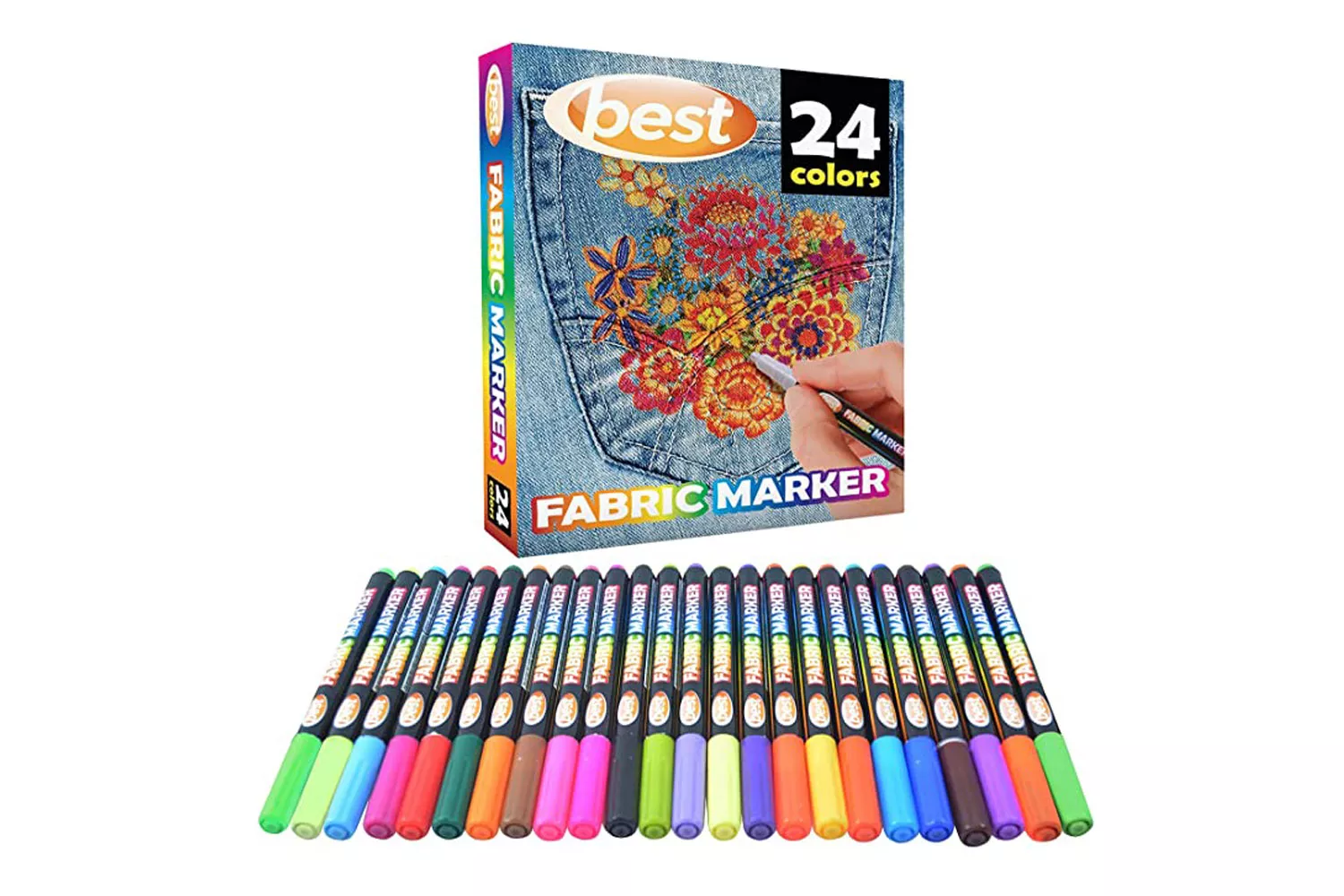
Best Fabric Markers at Amazon
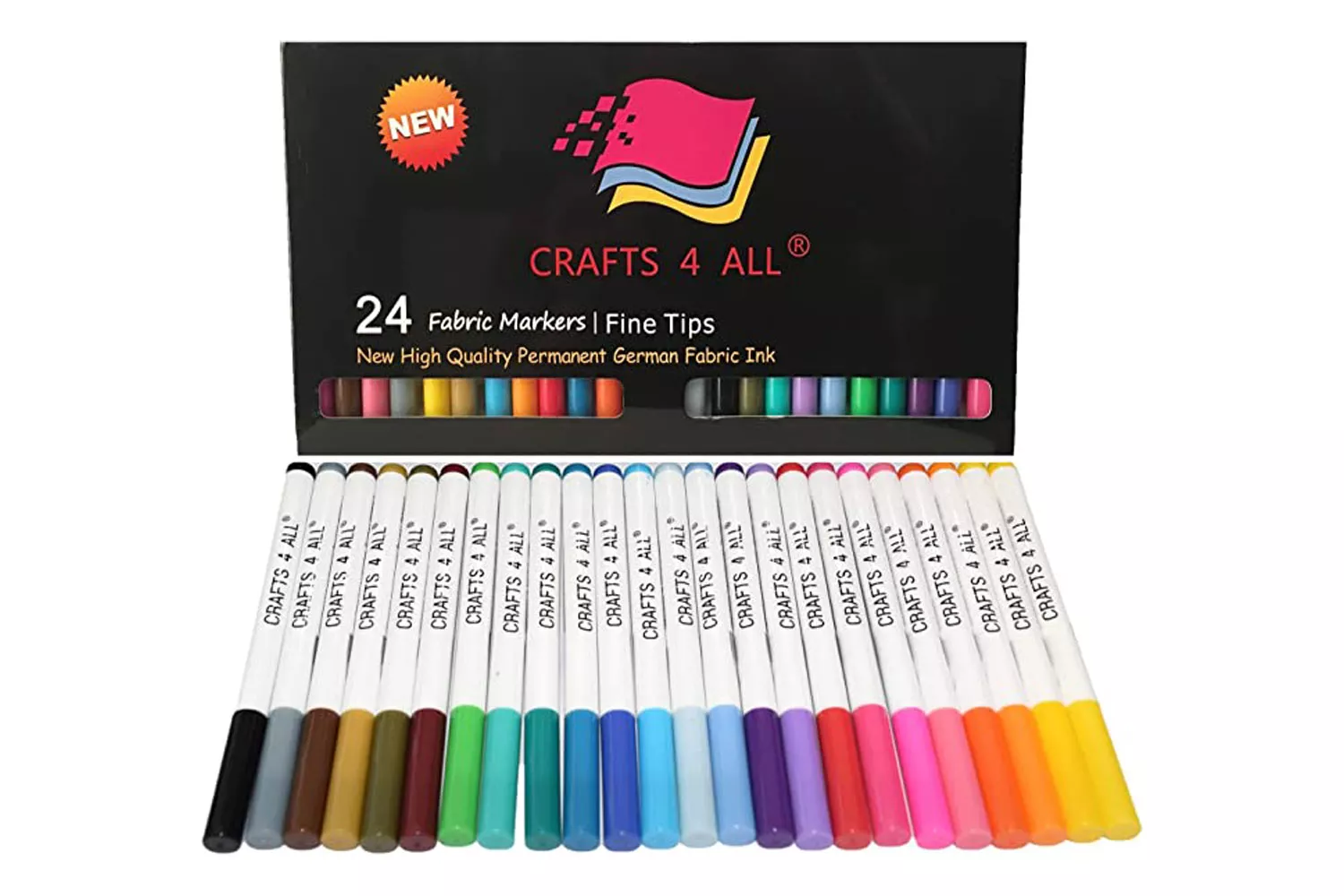
Check Current Price on Amazon
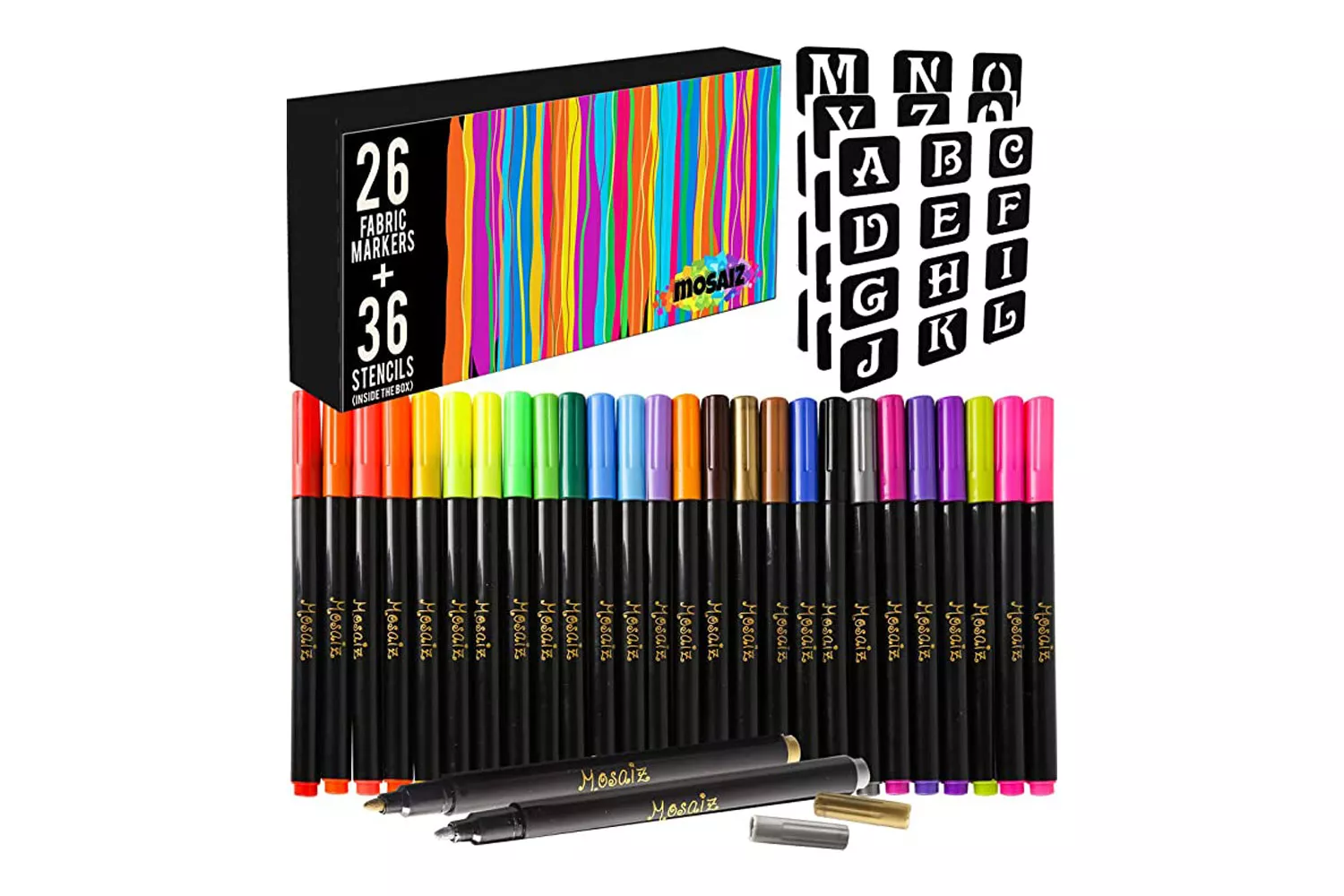
Check Current Price on Amazon
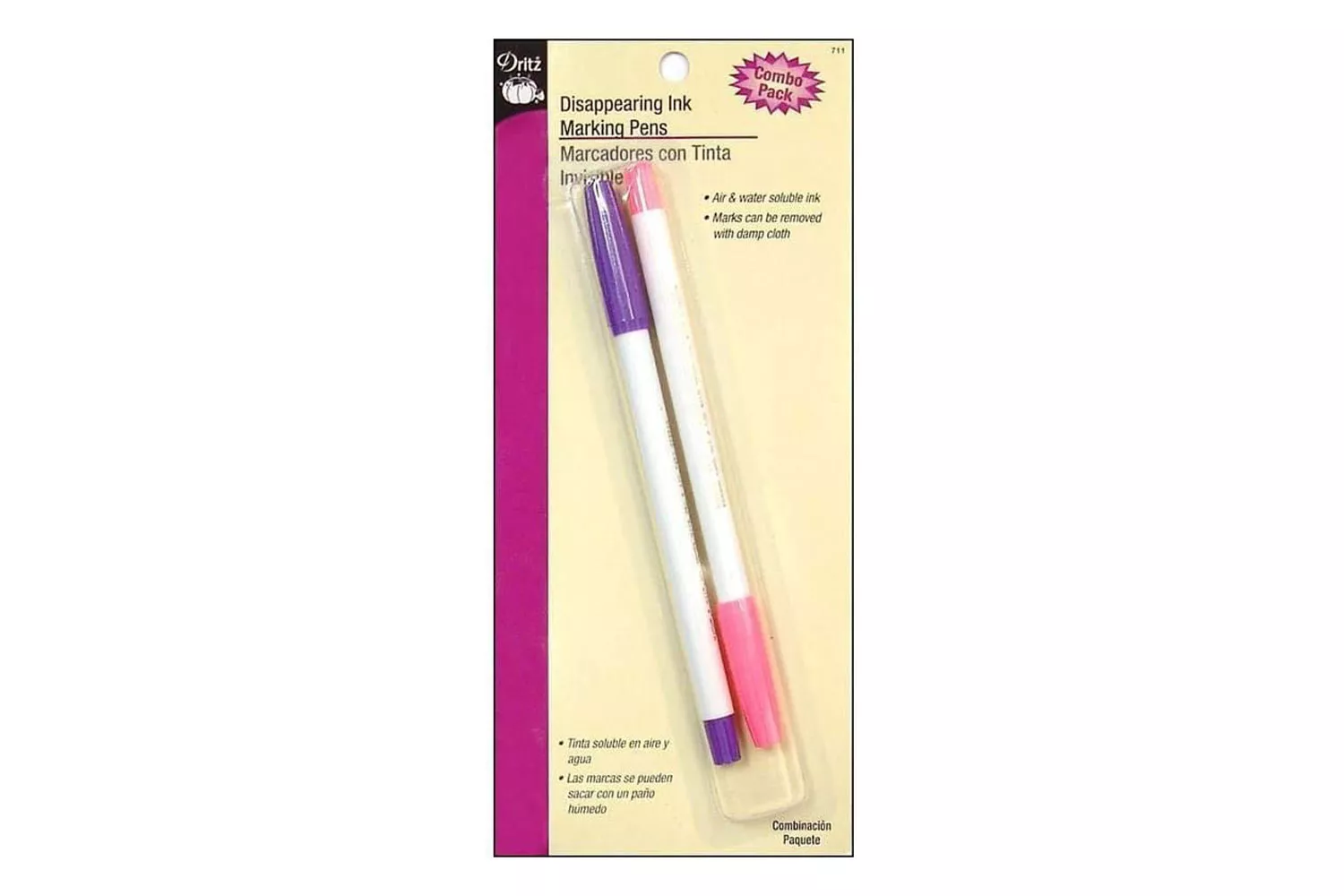
Check Current Price on Amazon
Final Takeaway
The best fabric marker is the one designed for your fabric and your type of mark. Tulip Dual-Tip is the strongest all-around option for light fabric because it combines detail and broad strokes. Crayola Fine Line and edding 4600 are better for precise lines. edding 4500 is a practical heat-fixed T-shirt marker. Tulip’s opaque Fabric Paint Markers are better for dark textiles. Sharpie Stained is useful for expressive brush work, while Rub-a-Dub is the specialist for permanent labeling.
Before drawing on a finished shirt, shoe, or bag, test the marker on the same fabric, use a barrier underneath, and follow the exact curing and washing instructions. Those three habits matter more than any blanket promise that a marker will “never bleed” or “never fade.”